
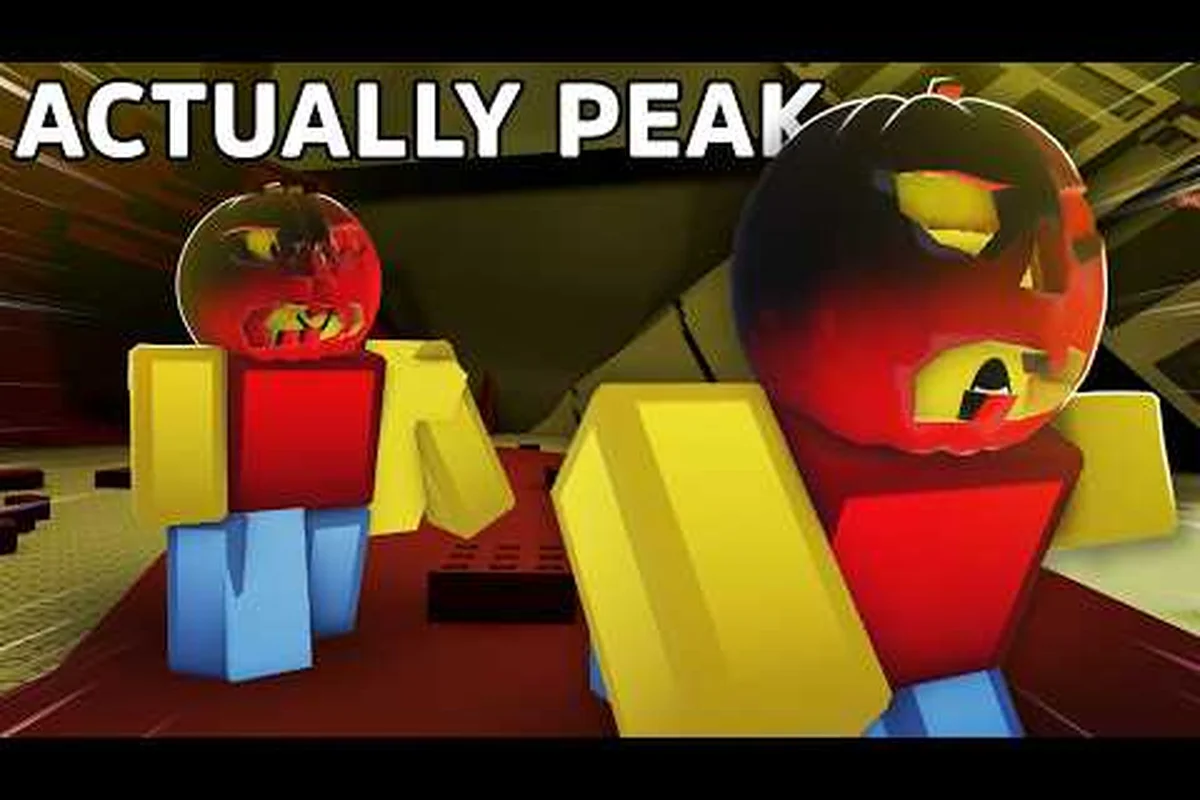
There is a particular kind of dread that hits when you walk into a room and almost recognize it. The carpet pattern is wrong, the lights flicker at a frequency that feels personal, and the hallway goes on three feet longer than any hallway should. That is the whole design language of Bloxrooms liminal spaces, and it is the reason the game has carved out a horror identity that does not rely on jump scares alone. The misremembered levels pull on the part of your brain that stores places you have only seen once, and they twist it until the familiar becomes hostile.
The official description on the Bloxrooms game page describes the experience as games you think you remember twisted into something that was never supposed to exist, and that single line does more work than a full marketing campaign. It explains why players walk out of a five-minute run feeling like they have lost something. The rooms are not new. They are almost-rooms, and your memory fills in the gaps with worse versions of the truth.
What Makes a Bloxrooms Liminal Space Actually Liminal
Liminal spaces in real-world photography get defined by empty corridors, off-peak mall floors, and rec centers at 4 a.m. Bloxrooms takes that same emotional palette and rebuilds it in Roblox, which sounds absurd until you see the lighting setup in BLOX-BUSTER. The liminal feel comes from a handful of deliberate design choices stacked together, and once you see them you cannot unsee them.
The first ingredient is negative space. Hallways are wider than they need to be, ceilings are a little too high, and corners are darker than the actual light sources would suggest. The second ingredient is silence between sounds. The soundtrack for each level, like the Blox Room OST for BLOX-BUSTER, uses long sustained pads with almost no melodic movement, so your brain keeps waiting for music that never comes. The third ingredient is architectural déjà vu. Doorframes look like the back of a video rental store, except the carpet is the wrong color and the ceiling tiles are not aligned.
| Liminal Design Element | How Bloxrooms Uses It | Effect on the Player |
|---|---|---|
| Negative space | Oversized rooms with sparse props | Lowers threat perception, then spikes it |
| Off-pitch lighting | Yellow fluorescents with flicker bugs | Triggers memory of late-night retail |
| Architectural déjà vu | Levels based on a familiar store, library, mall | Brain tries to autocomplete the place |
| Sound absence | Sparse OST, no ambient crowds | Forces attention onto footsteps and entity cues |
| Stretched geometry | Hallways longer than the map logically needs | Disorients navigation, slows escape timing |
The reason this combination works in a Roblox title is that Roblox is normally bright, blocky, and full of players yelling into voice chat. Bloxrooms strips all of that away. The empty server design and the audio engineering are doing the same job, which is to remove every signal that tells your brain "this is a game." When the signals are gone, the rooms start feeling like the misremembered places they are supposed to be.
The Misremembered Meaning Behind the Misremembered Levels
Players ask a fair question early on: what does the game actually mean by misremembered? The answer is not hidden in a single cutscene. It is the entire premise. The lore treats the levels you run through as places that were once real, or at least once in the cultural memory, and that have been corrupted by something the community calls anchor loss. The places still have a skeleton of what they were, but the details that made them specific have decayed.
The Three Anchor Levels and What They Were Supposed to Be
The current build ships with three named misremembered levels, each tied to a distinct memory archetype — the nostalgic (BLOX-BUSTER's video rental store), the institutional (CONCORDIA's library archive), and the transitional (The Eclipse's after-hours transit hub). Because the liminal horror in bloxrooms liminal spaces comes from rooms that feel almost remembered, the dev team encoded a specific Source Memory per level, then degraded it through targeted corruption: missing inventory, looping reading rooms, wrong-color carpet, or escalators frozen mid-run. Each archetype is also paired with a Signature Entity Class whose detection method mirrors the corruption type, which is why Stalkers watch BLOX-BUSTER's endless aisles, Chasers hear you through CONCORDIA's repeated pages, and Ambushers weaponize The Eclipse's broken architecture against you.
| Level | Source Memory | How the Memory Is Corrupted | Signature Entity Class |
|---|---|---|---|
| BLOX-BUSTER | A late-90s video rental store | Aisles run too long, the carpet is wrong, the staff counter is empty | Stalker class with vision-based detection |
| CONCORDIA | A community library or archive | Card catalogs are missing cards, books repeat, the reading room loops | Chaser class with audio-based detection |
| The Eclipse | A mall or transit hub after closing | Skylights are wrong, escalators stop mid-run, the food court is open but empty | Ambusher class with environmental traps |
The community has been calling these the three anchor levels because they are the fixed points in the procedural room chain. They are the only levels with dedicated OST uploads, including the Blox Room OST for CONCORDIA and the Blox Room Eclipse Soundtrack, which signals that the dev team treats them as canonical landmarks rather than random rooms. Each one corresponds to a different emotional flavor of liminal horror. BLOX-BUSTER is nostalgic and uncanny, CONCORDIA is scholarly and unsettling, and The Eclipse is the one that tells you something is actively wrong with the structure of reality.
Why Players Keep Asking "Why Do Levels Feel Familiar"
The familiarity effect is intentional, and the lore explains it through anchor loss rather than through any single plot twist. According to community data shared across fan wikis and Discord summaries, the levels are not copies of real places. They are reconstructions built from cultural memory fragments, and your brain is the source data. That is the answer to the question that keeps popping up in player chats: why do levels feel familiar even when you have never been to a place that looks like that.
The levels feel familiar because the design is built from the average of what the audience remembers about those archetypes. When you walk into BLOX-BUSTER, you are not walking into a specific store. You are walking into the vague idea of a video rental store that every player in the server carries around. The corruption is the part where the average drifts, and the dread is the part where your specific memory does not match the average the game is showing you.
The Unknown, Anchor Loss, and the Quiet End of the Map
One of the more interesting parts of the lore community is the term the unknown. It is not used in the official patch notes much, but it shows up constantly in fan posts, and it usually refers to the deeper rooms past the named levels. The procedural generator keeps building new rooms, and the farther you go, the less the architecture matches any real-world archetype. The game never tells you where the named levels end and the unknown begins, because the transition is designed to be soft.
Players report the following pattern based on community testing, and it lines up with the kind of decay the lore suggests: a predictable collapse of real-world architectural references as the procedural generator pushes past the named levels, which is why the bloxrooms liminal spaces that define the unknown feel less like places and more like memories losing their grip on what they were. The deeper band stops honoring room templates, geometry recombines in ways no blueprint ever described, and the familiar dread of the first ten rooms gives way to the disorienting "nothing is quite right" sensation that bloxrooms liminal horror is built around — a misremembered meaning that the community treats as a signal they have crossed into the unknown, where anchor loss makes navigation and entity behavior both less reliable.
| Depth Band | Room Behavior | Player Experience |
|---|---|---|
| First 10 rooms | Strong archetype match, recognizable landmarks | Cozy dread, easy to navigate |
| Rooms 10–25 | Recognizable but corrupted, repeating details | Disorientation, entity encounters increase |
| Rooms 25–40 | Archetype starts to fragment, walls and floors mix | Anxiety peaks, cash loot quality drops |
| Past room 40 | No archetype, geometry becomes abstract | Survival gameplay, lore-hunting mode |
This table is not from any official source. It is a synthesis of community testing reports, but it is consistent enough that experienced runners plan their gear and stamina around it. The deeper rooms also test bloxrooms entities lore more aggressively, which is why the deeper band pairs with the more abstract entity classes from the Bloxrooms monster list. The lore seems to be telling you that the further you get from a real memory, the more the rules of the entities shift.
How Entities and Liminal Spaces Work Together
A liminal space on its own is just an empty room with bad lighting. The reason the genre is a horror genre is that the emptiness implies a presence. Bloxrooms takes that implication and turns it into an actual spawner system, and the way the entities interact with the rooms is where the bloxrooms entities lore actually does its storytelling.
Entity Class vs Room Type
The current roster uses four broad entity classes, and each one is tuned to a different sense. The Stalker class relies on vision and works best in long sightlines, which is why BLOX-BUSTER is full of them. The Chaser class relies on audio, which is why CONCORDIA feels like the entities are always one room behind you. The Ambusher class is stationary and lives in doorways and choke points, which is why The Eclipse hits hardest at transitions. The fourth class, the Rift Phenomena, is non-physical and tends to appear in the deeper procedural rooms that no longer have a clear archetype.
| Entity Class | Detection Sense | Best Room Type | Player Counter |
|---|---|---|---|
| Stalker | Vision (line of sight) | Long hallways, open retail floors | Break line of sight, use corners |
| Chaser | Audio (footsteps, breathing) | Quiet libraries, low-ambient zones | Stop moving, hold breath near cover |
| Ambusher | Proximity (proximity trap) | Doorways, escalators, transition zones | Pre-scout chokepoints before crossing |
| Rift Phenomena | Rule-bending (out-of-bounds checks) | Abstract deeper rooms, geometry breaks | Map memorization, room-counting sanity |
The way the entities and the rooms are paired is not random. It is part of the bloxrooms nothing is quite right design philosophy. The store feels wrong because a Stalker could be watching from the wrong angle. The library feels wrong because the Chaser is hunting by sound and the silence is not safe. The mall feels wrong because the Ambusher is not coming down the escalator, it is the escalator. Each level gets a distinct flavor of dread because the entity roster is tuned to the architectural memory the room is built from.
The Lore Layer Under the Entity Behavior
Players who only care about the gameplay loop can treat entities as obstacle spawns. Players who care about the lore treat the entity behavior as evidence about the world. The fact that entities can spawn in rooms with no visible entry point tells you something about the rules of the level. The fact that Rift Phenomena appear more often in deeper rooms tells you that the deeper rooms are less anchored to anything real. The lore is not delivered in cutscenes. It is delivered in the spawn table.
This is also why community lore-hunters spend so much time mapping entity spawns. The map of where entities appear is a map of where the architectural memory is weakest, which is exactly the data you need to understand the decay pattern the game is built on. If you want a deeper dive into specific entity behavior, the Bloxrooms monster list covers the full roster in more detail.
How the Corrupted Rooms Tell Their Own Story
The hardest part of writing about the lore of this game is that the game does not want to be written about in a traditional sense. There is no codex, no journal entries scattered around the level, and the official trailer, which you can see in the BloxRooms official trailer, is mostly atmosphere. The story is in the architecture, and the trick to reading it is to stop looking for plot and start looking for the pattern of decay.
Three Layers of Liminal Decay
When the community maps out what the misremembered levels are doing across multiple runs, three layers of decay show up over and over, and each one peels back something the room was quietly trying to hide about the loop, the layout, and the laws of the level itself.
-
Surface decay — wrong colors, wrong textures, swapped signage. The room is almost what you remember, but the details are off.
-
Structural decay — hallways extend past where they should end, rooms loop back on themselves, ceilings are taller than the building code would allow. The room breaks the implicit rules of architecture.
-
Causal decay — lights flicker in patterns that have no source, sounds play in rooms with no speakers, doors close behind you with no mechanism. The room breaks the implicit rules of physics.
Each layer is a step further from a real memory. Surface decay is the layer most players notice first, which is why BLOX-BUSTER registers as uncanny on the first run. Structural decay is the layer that disorients navigation and forces you to use a map. Causal decay is the layer that crosses into the unknown, and it is where bloxrooms liminal horror stops being a setting and becomes a condition of the world.
Why the Decay Gets Worse as You Push Deeper
The progression is not balanced around difficulty for its own sake. It is the lore expressed through level design. The deeper rooms are more decayed because the further you get from a real-world archetype, the less material the generator has to work with. Once the architectural memory runs out, the rooms start to drift toward abstract geometry, which is exactly the part of the map where Rift Phenomena spawn most often. The pattern is the story. The rooms are getting less real because something in the world is making them less real, and you are walking into that something by choosing to keep pushing.
This is also why returning players talk about the game differently after a few dozen runs. The first few runs feel like a haunted house. The runs after that start to feel like an archaeology dig, where every corrupted detail is a clue about what the level used to be. If you are interested in where this design philosophy came from and how it connects to the broader horror lineage the game is pulling from, the Bloxrooms core story breakdown covers the larger narrative frame.
How to Experience the Horror the Way It Was Designed
There is a difference between playing the game and playing the game in a way that lets the lore land. Most of the tips below are not about gear or cash. They are about how to put yourself in the right state to notice the design language the game is using.
-
Run solo first. Co-op runs are fun, but the chat and the footsteps of other players break the audio vacuum that makes CONCORDIA feel right. If you want the bloxrooms misremembered meaning to actually register, do your first ten or twenty runs without a squad.
-
Use headphones, not speakers. The Stalker-class entities give away their position through audio cues that are nearly impossible to localize on a stereo pair. The audio design is doing real work, and the lore hits harder when you can hear it.
-
Don't speedrun the early levels. The first few rooms of each anchor level are where the surface decay is most readable. If you sprint past them, you skip the part of the map that teaches you the design language for the rest of the run.
-
Map your own decay. Keep a small notebook or a screenshot folder of rooms where the architecture breaks. After a few runs, the pattern becomes obvious, and the pattern is the lore.
-
Compare run order, not just run outcomes. Two runs of the same level will not generate in the same order, and the differences between runs tell you which details are fixed and which details are being regenerated. The fixed details are the anchor. The regenerated details are the corruption.
The deeper you get into the procedural chain, the more the rules of the game start to feel like a metaphor for memory itself. The fixed parts of the level are the parts your brain refuses to let go of. The corrupted parts are the parts where the memory has been edited by time, context, and the unreliable narrator that lives inside your own head. That is what bloxrooms nothing is quite right is actually about, and it is a more interesting read of the game than any single plot twist could deliver.
Frequently Asked Questions
What does "misremembered" actually mean in Bloxrooms liminal spaces?
The term refers to levels built from the average cultural memory of a real-world archetype, then corrupted by a process the community calls anchor loss. The rooms are not copies of specific places, so they feel familiar without being identifiable, which is the core mechanic behind bloxrooms liminal spaces. Familiar architecture, wrong details, and the brain fills the gap with the worst possible autocomplete.
Why do Bloxrooms levels feel familiar even on a first run?
The levels are designed from the shared memory of an archetype, not from any one real location. When you walk into BLOX-BUSTER, you are walking into a composite of every video rental store the audience carries around, and that is why bloxrooms why do levels feel familiar is one of the most common questions new players ask. The game is reading your memory more than it is showing you a map.
Is Bloxrooms liminal horror different from other Roblox horror games?
Yes, because it is built around atmosphere and slow dread rather than chases and jump scares. Most Roblox horror titles lean on entity aggression, while bloxrooms liminal horror uses empty rooms, sparse sound, and architectural wrongness to build tension. The horror is environmental, which is part of why the community responds to it as a lore game and not just a survival game.
What is "the unknown" in Bloxrooms lore?
The unknown is the community term for the deeper procedural rooms past the named anchor levels, where the architectural memory has decayed enough that the rooms no longer match any real-world archetype. According to community data, entity behavior shifts in these rooms and Rift Phenomena spawn more often, which is why the deeper runs feel like a different game. The unknown is where the rules stop applying in recognizable ways.
How does Bloxrooms entities lore connect to the liminal spaces?
The entity roster is tuned to the architecture, so each room type gets a matching horror logic. Stalker-class entities thrive in long BLOX-BUSTER hallways, Chasers hunt by audio in CONCORDIA, Ambushers lock down choke points in The Eclipse, and Rift Phenomena appear in the deep unknown where the geometry itself stops making sense. Bloxrooms entities lore is not a separate story layer. It is the story of the rooms, told through spawn tables and detection senses.