
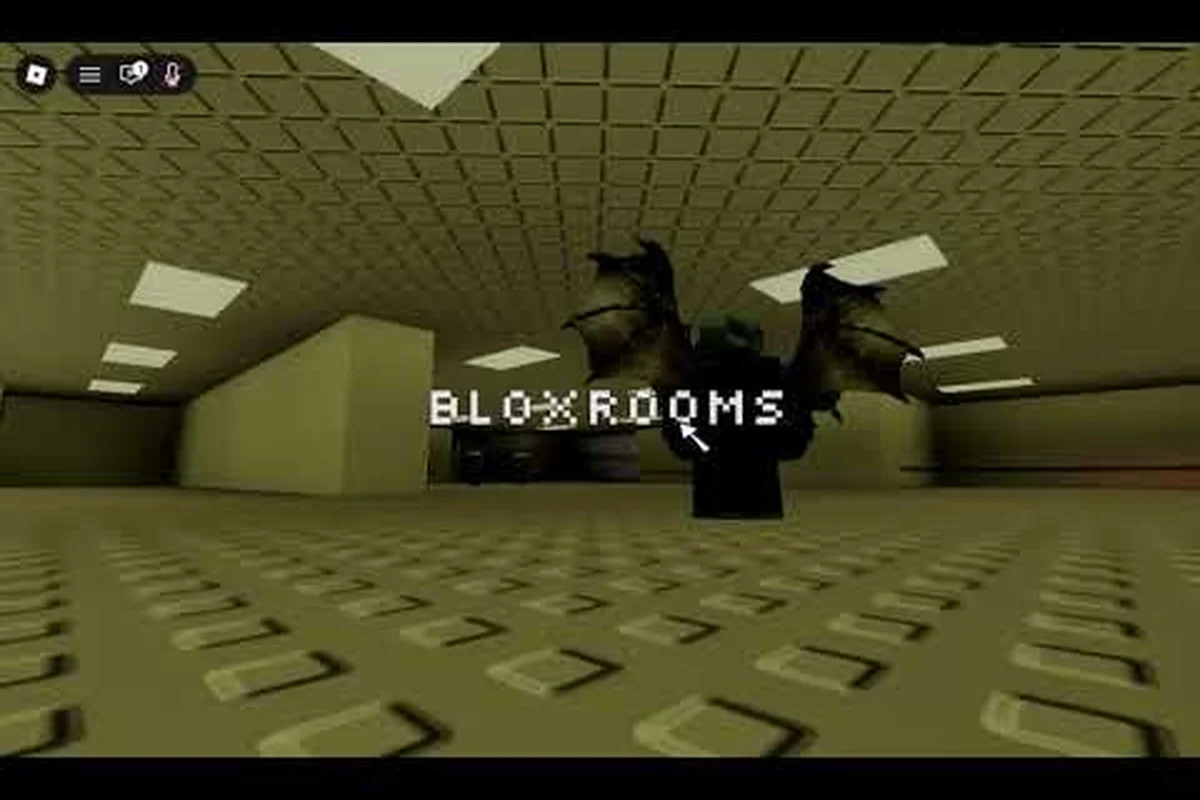
Walking into Bloxrooms for the first run feels like stepping into a room you almost remember. Walls look familiar, but the geometry is wrong, the audio cues are slightly delayed, and the entities roaming the hallway do not follow the rules you expect. This Bloxrooms beginner guide breaks the opening hours into the core controls, the scavenge-and-upgrade loop, and the first rooms every new player should memorize before chasing deeper floors. According to the official Bloxrooms game page, the experience launched July 31, 2026, sits in active BETA, and currently runs 30-player servers with around 855 concurrent players as of the September 8, 2026 build.
The Shape of the Game and the Loop You Repeat
Before learning any buttons, it helps to understand the shape of the game you are stepping into. Bloxrooms is a Roblox horror exploration title built around misremembered levels — rooms that look almost right but feel distorted. You spawn in, scavenge for artifacts, sell them for cash, upgrade gear, and push one level deeper. That single loop is the entire game, and every system on the wiki ladders back to it.
The Five-Minute Loop You Will Repeat Every Run
Every session of Bloxrooms cycles through the same five beats: spawn, explore, scavenge, evade, extract. New players who internalize this loop stop dying in the first ten minutes and start stacking cash quickly, because the loop bakes in a natural pacing trick: each phase has a short, finite timer (the 10-second spawn window, 2–4 minute explore budget, and 30-second extract bank) that limits how deep greed can push you before an entity check forces a decision. Treat those four numbers as hard gates rather than suggestions, and your early Bloxrooms runs shift from panic-sprinting into the dark to predictable cash stacks built around scavenge artifact hauls and clean extracts.
| Step | What Happens | Beginner Goal | Time Spent |
|---|---|---|---|
| Spawn | You appear at a level entrance with starter gear | Note your exit door and immediate hiding spot | 10 seconds |
| Explore | Move room to room, reading audio cues | Map 2–3 safe hubs before any entity encounter | 2–4 minutes |
| Scavenge | Pick up artifacts, cash, and gear parts | Fill inventory with at least one sellable artifact | 1–2 minutes |
| Evade | Hide, sprint, or detour around entities | Survive with zero deaths on run one | 30–90 seconds |
| Extract | Return to the entrance or hit a checkpoint | Bank cash and decide whether to push deeper | 30 seconds |
Why Misremembered Levels Matter for a Beginner
The "misremembered" framing is not a flavor term. It defines how the map is built. Each level is a procedurally chained set of rooms that feel like a familiar Roblox space — a school, a lobby, a theater — but with shifted doorways, swapped lighting, and audio that arrives half a beat late. The official description confirms the game takes spaces you think you remember and "twists them into something that was never supposed to exist," which is why Bloxrooms tips for beginners always circle back to audio first and visuals second.
For a new player, this design has two practical consequences. First, no run looks exactly like the last, so memorizing one route will not carry you forever. Second, your brain will fill in gaps that the level does not actually have, which makes it easy to walk into a wall, a dead end, or an entity patrol you were not expecting. Treat the first run as a calibration lap, not a push for loot.
Controls, Movement, and the Audio Cues That Save Your Run
Bloxrooms uses a fairly standard Roblox control scheme, but the way you read the world around those controls is what separates a survivor from a casualty. The community consistently flags audio detection as the single highest-leverage skill for new runners, and the Bloxrooms gameplay video by Imadumbo demonstrates it in real time: the player turns off the camera panic and listens for breathing, scratching, and distant footsteps before deciding to hide or sprint.
Core Controls Every Beginner Should Map to Muscle Memory
| Action | Default Key | When You Use It | Beginner Mistake |
|---|---|---|---|
| Move | WASD | Always | Sprinting everywhere, burning stamina |
| Sprint | Shift | Entity confirmed nearby, long open hallway | Sprinting into dead ends |
| Crouch / Hide | C | Suspicious audio, low stamina, ambush room | Standing fully upright near doorways |
| Interact | E | Artifact pickup, door, checkpoint, sell point | Mashing E through walls |
| Inventory | Tab or I | Mid-run loot check, gear swap | Opening inventory mid-chase |
| Audio Focus | Headphone toggle | Every run | Playing on laptop speakers first |
Using Sound to Locate Entities Before They See You
The misremembered levels all share one audio-first rule: sound travels roughly 1.5–2× further than an entity's line of sight, so stalkers, chasers, and ambushers will broadcast their presence one room before you ever see them on screen. On run one, focus your ears on three audio families — breathing/heartbeat cues, footstep cadence, and environmental drift — because each one maps to a different survival response (hide, reposition, or pre-aim a door) and mastering all three is what separates a first-clear from a restart loop.
-
Breathing and heartbeat: A soft inhale or a faster heart rate signals an entity is within one or two rooms. Crouch, find a corner, and wait.
-
Footstep variants: Each entity type has a distinct footstep cadence. Stalkers have slow, heavy steps; chasers have quick, scuffing runs; ambushers stay silent. Learning the difference cuts your panic sprint rate in half.
-
Environmental drift: Doors creak when an entity is about to path through them, lights flicker with a telltale hum, and distant radio chatter shifts tone. These are not random — they are scripted warnings.
The first thing most Bloxrooms tips for beginners lists mention is to drop the in-game music slider, raise the SFX slider, and play in headphones. The game is balanced around that audio mix, and a stock laptop speaker loses 60–70% of the directional data you need to survive.
The Three Levels You Can Reach on Day One and What Each One Teaches
Bloxrooms currently ships with three core levels in the rotation, and each one is essentially a tutorial for a different skill. A smart Bloxrooms starting guide respects that order: do not try to push into The Eclipse before you can clear Concordia in under six minutes without taking a hit.
Blox Buster, Concordia, and The Eclipse at a Glance
| Level | Difficulty | Best Beginner Skill | Cash Yield | Respawn Pressure |
|---|---|---|---|---|
| Blox Buster | Easy | Learning controls and basic hiding | Low to medium | Light — short entity patrols |
| Concordia | Medium | Reading the map and timing respawns | Medium to high | Moderate — overlapping patrols |
| The Eclipse | Hard | Audio reading and gear dependence | High | Heavy — chasers and rift events |
Blox Buster as Your Training Wheels
Blox Buster is the first level most new players unlock, and it is intentionally forgiving. Hiding spots are abundant, entity patrols are short, and the artifact distribution is heavy on Common and Rare drops. Treat this level as your gear lab: pick up everything, sell aggressively, and learn which artifacts are worth holding and which should be flipped the moment you extract. You can also reference our deeper Bloxrooms starting guide breakdown of beginner mistakes to see how solo runners approach the same level differently from squads.
Concordia as the Map-Reading Exam
Once Blox Buster feels routine, Concordia is where the misremembered levels concept really shows its teeth. Rooms repeat visually but shift in connection, so a hallway you cleared last run may dead-end this run. Concordia is also where respawn timers start to matter, since artifact nodes cycle on a 3–5 minute window. Players who learn to chain two artifact rooms back-to-back here essentially double their per-hour cash rate.
The Eclipse as the Audio Boss Fight
The Eclipse is the level where the game stops forgiving control mistakes and starts punishing audio mistakes. Rift Phenomena appear, multiple chaser classes stack, and visual cues are deliberately unreliable. You should not step into The Eclipse on a first run guide path until your gear is at least Tier II and you have cleared Concordia with cash in the bank twice in a row. When you are ready, our level-by-level unlock and cash breakdown walks through the unlock requirements and expected payouts for each tier.
Your First Hour: A Practical Bloxrooms Starting Guide Walkthrough
Most new players die in the first hour not because the game is unfair, but because they try to do everything at once. The fastest path to a stable cash engine is a deliberately boring first hour: learn the level, learn the audio, learn the cash math, and ignore the deep lore until you have gear to chase it with.
A 60-Minute Schedule for New Runners
| Minute | Goal | What to Avoid | Success Check |
|---|---|---|---|
| 0–10 | Spawn into Blox Buster, locate the entrance, find one hiding spot | Pushing into a new room without audio check | Reach extract with starter artifact |
| 10–25 | Run Blox Buster twice in a row, scavenge, sell at the vendor | Hoarding Common artifacts past first sell window | Bank 200+ cash, no deaths |
| 25–40 | First Concordia attempt with the same routine | Sprinting on first encounter | Survive 6+ minutes, bank 400+ cash |
| 40–55 | Spend cash on first gear upgrade, repeat Concordia | Spending on cosmetics before Tier I gear | At least one Tier I gear piece equipped |
| 55–60 | Review run, note one hiding spot, one entity cue | Repeating the exact same path without audio check | Plan tomorrow's first run |
The Cash Math Most Beginners Get Wrong
A new player's instinct is to fill the inventory with everything shiny. A survivor's instinct is to ask: what is the artifact value list telling me about this slot right now? Common artifacts are almost always sell-on-sight — the slot they occupy is worth more than the payout, and you will replace them in two rooms. Rare artifacts are the real mid-game carry: they pay well, they are common enough to farm, and they unlock the first round of meaningful gear upgrades. Epic and Legendary artifacts should be hoarded until you know the value list cold, because selling one at the wrong window can mean a 30–40% loss versus a patient sell.
What to Upgrade First (and What to Ignore)
The first hour also answers the most common question in every Bloxrooms how to play conversation: where does my cash go? Three priorities outrank everything else for a brand new account, and the order matters because every entity encounter in the first run funnels your spending into those same three buckets. Speed gear is the cheapest stat that saves the most runs — a Tier I sprint upgrade is roughly equivalent to adding a free second of reaction time against the chaser, and most new players lose their first three lives by being half a second too slow in a doorway.
-
Speed gear first: A single Tier I speed upgrade often decides whether you escape an ambush. Slower players die in hallways; faster players reach the next hiding spot.
-
One defensive slot second: Pick the slot that matches the entity you keep dying to. If chasers kill you, invest in stamina. If ambushers kill you, invest in a scanner or a flashlight upgrade.
-
Utility third, always: Scanner, audio boost, and inventory size all matter, but only after you can survive long enough to use them.
A quick note for players who want to pair this routine with friends: the same cash math applies, but server pressure changes. Our coop coordination and squad-role guide explains how multiplayer shifts both artifact spawn density and entity aggression, and why your solo-first-hour routine is the right training base before bringing a partner in.
First-Room Survival: Hiding Spots, Sprint Decisions, and Panic-Proof Habits
The single most useful habit a new runner can build is a pre-mapped hiding spot routine. Instead of looking for cover mid-chase, you already know the two or three spots in each room that count as safe. That decision compression is what lets the rest of your brain focus on audio and loot instead of panic.
The Hide-vs-Run Decision Tree for Run One
| Situation | Default Action | Why | Beginner Trap |
|---|---|---|---|
| Heartbeat cue, no visual | Hide in nearest corner | Ambushers trigger on line-of-sight, not sound | Running toward the cue |
| Footsteps, one room away | Crouch, prep sprint exit | Stalkers are slow; a planned exit beats a panic sprint | Sprinting immediately |
| Sprint-down chaser, open hallway | Sprint to the next door, then hide | Chasers win in straight lines, lose in loops | Hiding in the open |
| Rift event starts | Move to the nearest lit room | Rifts punish dark, isolated corners | Staying in a "safe" dark room |
| Unknown audio, low stamina | Hide and wait | Stamina recovery is faster than revive | Burning last stamina on a guess |
Panic-Proof Habits Worth Building in Hour One
Three small habits compound into massive survival gains across a session, and in bloxrooms the math behind that compounding is brutal: a typical first-hour run might see you take 15 to 25 damage events, but skipping the door-count, audio-facing, and extract-marking habits routinely inflates that count to 40+ because each ignored cue cascades into the next room. Beginners who internalize these rules early convert their first 20-minute run from a coin-farming detour into a clean solo clear, the foundation every bloxrooms starting guide should build on before chasing Concordia's harder handoffs.
-
Count doors when you enter a room: Two-door rooms are usually safe; three-door rooms usually have a chaser patrol. This one habit alone changes how you plan every entrance.
-
Always face the direction of last sound: Audio cues almost always come from the side the entity is approaching. Facing the sound buys you one to two seconds of reaction time, which is the difference between a hide and a hit.
-
Mark your extract path on every entry: Before looting anything, look back toward the entrance. If you cannot describe your path out in one sentence, you are too deep without a plan.
Players who build these habits in their first hour tend to clear Concordia by hour three, and The Eclipse by the end of the first week. Players who skip them tend to blame the game for being unfair, when the unfairness is almost always an audio cue they ignored two rooms back.
Building a Sustainable Early-Game Cash Engine
Surviving is table stakes. The actual Bloxrooms how to play question for a beginner is: how do I turn surviving into gear, and gear into deeper runs? The answer is a small set of farming rules that hold up across all three current levels.
The Beginner Cash Engine in One Page
| Rule | What It Looks Like in Practice | Why It Works |
|---|---|---|
| Two runs, then sell | Run a level twice, then bank everything at the vendor | Avoids the "one more room" trap that costs more than it pays |
| Sell Commons on sight, bank Rares | Common artifacts go in the sell pile immediately | Inventory slots are the real currency, not the cash itself |
| Hoard Epics for value windows | Hold Epic and Legendary drops for 2–3 sell cycles | The value list shifts; patient sells often beat fast sells |
| Upgrade speed, then defense | Spend first 1,000 cash on speed gear, next 800 on a defensive slot | Survival unlocks farming; farming unlocks upgrades |
| Re-run a level before going deeper | Clear Concordia twice before unlocking The Eclipse | Gear scaling punishes premature level jumps |
Common Beginner Traps That Drain Cash Fast
-
Chasing every artifact node: The last artifact in a chain is almost always guarded. New players who sprint for it lose more cash in deaths than they gain in loot.
-
Upgrading cosmetics early: The cosmetic slots feel rewarding, but they do not change survival math. Bank the cash for gear first.
-
Ignoring the respawn timer: Artifact nodes respawn on a predictable cycle. Re-entering a room 30 seconds too early wastes time; re-entering two minutes too late misses a window entirely.
-
Selling in panic after a chase: The sell vendor does not change prices based on your stress level. If you would not have sold before the chase, do not sell after it.
When to Push Deeper (and When to Stay)
The push-deeper question is the most common Bloxrooms tips for beginners topic after audio. The rule of thumb from the community: if your last three runs on a level ended with zero deaths and a positive cash delta, you are ready for the next level. If any of those three runs included a death, stay one more session. Bloxrooms rewards patient climbers far more than it rewards rushers, and the gear scaling between levels is steep enough that a premature jump usually sets a beginner back two hours of farming.
Frequently Asked Questions
How do I start playing Bloxrooms for the first time?
Find the official Bloxrooms game page on Roblox, join any open server, and you will spawn in Blox Buster with starter gear. Spend your first run learning the entrance door, one hiding spot, and the sell vendor location — not chasing artifacts.
What controls should a beginner learn first in Bloxrooms?
WASD for movement, Shift for sprint, C for crouch and hide, E for interact, and Tab or I for inventory. The most important control habit is pairing crouch with audio cues, because Bloxrooms tips for beginners consistently show that crouching at the right moment saves more runs than sprinting at the wrong one.
Is Bloxrooms beginner-friendly or should I wait for a guide?
The current BETA build is genuinely beginner-friendly, especially on Blox Buster and Concordia. Servers run 30 players, the community is active, and the loop is short enough that a new player can learn the basics in under an hour. A guide like this one simply compresses that learning curve.
What is the best level to farm on a first run guide path?
Blox Buster is the best first-run farming level because artifact spawns are dense, hiding spots are plentiful, and entity patrols are short. Once you can clear Blox Buster twice in a row without dying, Concordia becomes the better cash farm and is the right next step in any Bloxrooms starting guide.
Should I play Bloxrooms solo or with friends as a beginner?
Solo is the right starting point, because it forces you to learn audio cues, hiding spots, and the sell loop without depending on a squad. Once you can clear Blox Buster and Concordia solo, bringing a friend in unlocks faster artifact runs and shared gear pooling, which is a good moment to revisit a Bloxrooms first run guide for the multiplayer adjustments.