
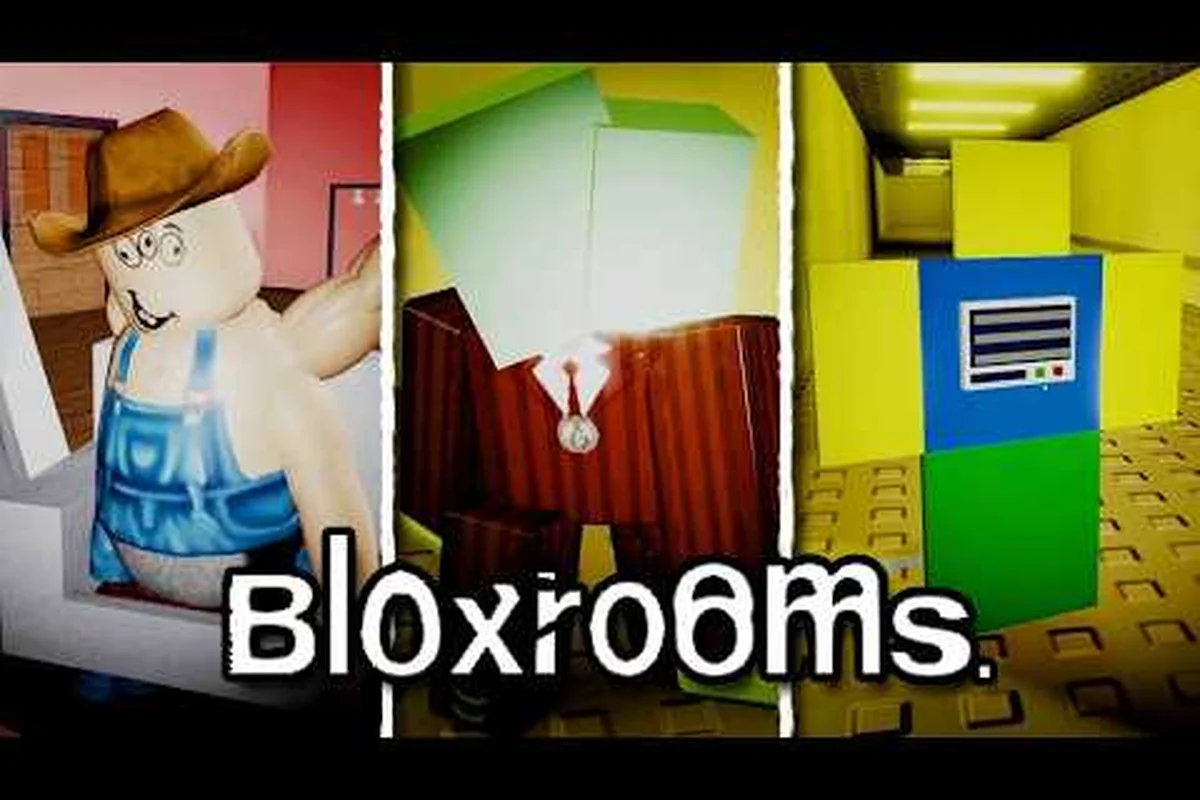
Bloxrooms is a Roblox horror game where every familiar room you half-remember from a childhood arcade can be a doorway to something that should not exist, and because of that design, the question "does Bloxrooms have an ending?" sits at the very center of its lore. Players who push deep into the misremembered levels keep finding locked doors, shifting wallpapers, and entities that recognize them by name, which makes the existence of a finale feel both inevitable and impossible. The short answer is yes, but the way the ending actually works is stranger than a simple credits roll. What follows is a full breakdown of the secret finales, the hidden story beats that gate them, and the backrooms-style lore framework that holds the whole experience together. For a broader look at how the misremembered levels connect to the wider backrooms mythos, the Bloxrooms backrooms lore overview is a good companion read.
How Bloxrooms Structures Its Endings
Bloxrooms does have an ending, but it does not function like a single linear conclusion. Instead, the experience layers multiple finales on top of a procedurally shifting map, and each finale ties back to a different part of the hidden story. The game's design pulls from the same tradition as the backrooms wiki: infinite non-Euclidean office space, familiar-but-wrong architecture, and entities that bend the rules. According to the official Bloxrooms page on Roblox, the project is still in BETA and the core loop is built around spawning into endless liminal rooms, scavenging artifacts for cash, and upgrading gear to push deeper, which means the ending triggers only after a long preparation arc.
The structure of endings in Bloxrooms is best understood as three layers: a Soft Ending, a Secret Ending, and a True Ending. Each one demands progressively more knowledge of the misremembered levels, the entities, and the artifact economy, and each one reveals a different piece of the backrooms lore timeline.
| Ending Type | Trigger Condition | Story Reveal | Difficulty to Reach |
|---|---|---|---|
| Soft Ending | Reach Level 60 and exit through the red door | Confirms the simulation is broken | Moderate |
| Secret Ending | Collect 5 specific Key Artifacts in order | Confirms a watcher is cataloging you | Hard |
| True Ending | Complete the Eclipse sequence and input the Cipher | Confirms the rooms remember the player | Very Hard |
The Soft Ending is the most accessible and is essentially a confirmation that there is, in fact, a finale waiting for anyone who survives long enough. The Secret Ending requires a much more deliberate run, and it is the one that most players are referring to when they ask whether Bloxrooms has an ending that actually matters. The True Ending is still being discovered in fragments by the community, and the lore implications of reaching it are the closest thing the game has to a canonical conclusion.
The Soft Ending and What It Confirms
The Soft Ending is the first narrative wall a player can crash into, and it answers the surface-level question "does Bloxrooms have an ending?" with a clear yes. After roughly sixty levels of misremembered rooms, players encounter a Red Door in a hub zone that looks architecturally distinct from everything around it. Walking through it triggers a short cutscene, a screen of corrupted text that resolves into a single line, and a return to the lobby. The cutscene implies that the entire Bloxrooms simulation is a broken memory being replayed by something that does not fully understand what it is looking at.
Players who reach the Soft Ending often describe it as anticlimactic, which is intentional. The misremembered levels are built so that each one feels like a place you have been before, and the Soft Ending confirms that the feeling of familiarity is not a coincidence. According to community testing reported by players, the Red Door's position shifts slightly between updates, which suggests the developers are using it as a soft retcon point whenever new lore beats are added. The Soft Ending does not close the story, and it is not meant to. It functions more like the closing page of a prologue.
| Soft Ending Trigger Step | Player Action | Common Failure Point |
|---|---|---|
| Reach Level 60 | Survive misremembered levels | Dying to Crawlers in the service corridor |
| Identify the Red Door | Visually scan the hub zone | Confusing it with a regular exit |
| Approach alone | Disband any co-op party | Triggering the door with others present locks the Soft Ending |
| Enter the door | Hold E for 3 seconds | Moving too early resets the trigger animation |
The alone requirement is one of the most-discussed Soft Ending rules in the community. If you walk through the Red Door with even one other player in your server, the door refuses to open and instead teleports the entire party back to the lobby. This has been interpreted as a lore beat in its own right, because the entities in Bloxrooms are coded to react differently to groups than to lone players, and the Red Door appears to follow the same behavioral rules.
The Secret Ending and the Key Artifact Chain
The Secret Ending is where the question "does Bloxrooms have an ending?" starts to feel like a real question again, because the requirements are not obvious. To trigger it, you have to collect five Key Artifacts from five different misremembered levels and interact with them in a very specific order at a hidden altar. The Key Artifacts are not the same as the cash-loot artifacts you normally pick up for upgrades, which is a distinction the game makes visually: Key Artifacts glow a faint blue and play a distant chime when nearby, while regular artifacts are inert.
The five Key Artifacts are scattered across the Bloxrooms backrooms levels and each one ties to a different piece of the hidden story. Community testing suggests the chain is not random, and the developers have confirmed through patch notes that the order matters because the altar reads the artifacts as a sentence, not a checklist. If you bring the artifacts in the wrong order, the altar simply does not respond and the artifacts are consumed, which means the run is wasted.
| Key Artifact | Misremembered Level | Lore Beat It Unlocks | Recommended Preparation |
|---|---|---|---|
| Torn VHS Tape | BLOX-BUSTER | Introduces the watcher | Bring a flashlight, avoid the projectionist |
| Hospital Bracelet | The Children's Ward | Confirms there were other players before you | Carry two med-kits, the level is entity-dense |
| Employee Badge | The Office Hub | Names the entity cataloging the rooms | Memorize the layout, the geometry shifts mid-run |
| Telescope Lens | The Eclipse | Hints at the True Ending | Upgrade perception stats to spot hidden glyphs |
| Children's Drawing | The Playground | Closes the watcher loop | Bring no weapons, the level punishes aggression |
Each artifact unlocks a new piece of the backrooms wiki lore that the official channel only hints at. The Torn VHS Tape is dropped in BLOX-BUSTER, a level that the official soundtrack release on the Bloxrooms YouTube channel confirms as a misremembered version of a familiar video store. Players who collect the tape hear a single whispered sentence when they pick it up, and that sentence is the first on-screen text in the game that refers to the player by name, which is a major story beat.
The order of the chain matters because the altar reads the artifacts in sequence, and each one primes the altar to interpret the next one correctly. Community reports indicate that bringing the artifacts in any other order produces no reaction at all, which has led players to theorize that the chain is not just a gate but a sentence in the hidden story. The most consistent order reported by players is the same one listed in the table above, and it forms what the community calls the Watcher Loop.
The Watcher Loop and the Hidden Story
The Watcher Loop is the narrative frame around the Secret Ending, and it is what most players mean when they talk about the Bloxrooms hidden story. The five Key Artifacts are not random collectibles. They are pieces of evidence that a single entity has been cataloging the misremembered rooms, the other players, and the artifacts you pick up long before you arrived. The Torn VHS Tape shows the watcher recording you, the Hospital Bracelet shows it tagging previous players, the Employee Badge shows it working from inside the Office Hub, the Telescope Lens shows it observing from The Eclipse, and the Children's Drawing shows it trying to communicate with players through a level they trust.
The Watcher Loop is also where the backrooms entities lore gets specific. The watcher is not the only entity in the game, but it is the only one that the Secret Ending forces you to acknowledge. Other entities, like the Crawlers in the service corridor or the Host in the Office Hub, can be evaded or fought, but the watcher is structurally woven into the chain. According to community data shared on the Bloxrooms backrooms wiki-style community hubs, the watcher does not have a fixed spawn, which fits the backrooms wiki trope of a phenomenon that is everywhere and nowhere at once.
The True Ending, the Eclipse, and the Cipher
The True Ending is the layer of Bloxrooms that most players never reach, and it is also the part of the question "does Bloxrooms have an ending?" that the community is still actively piecing together. To approach it, you have to clear The Eclipse, which is a special misremembered level with its own dedicated soundtrack. The Eclipse is a long, mostly empty hub of broken furniture and broken lighting that loops in on itself, and it is one of the levels confirmed by the Eclipse Soundtrack upload on the official channel.
When you reach the center of The Eclipse, you find a glyph on the floor that looks like a corrupted version of the Roblox logo. Interacting with the glyph opens a Cipher prompt, and the Cipher is a string of corrupted letters that the player has to unscramble. Community testing suggests the Cipher is not solvable from inside the game, and most players have to cross-reference it with the Bloxrooms lore timeline and other community resources to figure out the intended word. Once the Cipher is solved, The Eclipse collapses into a final room that has never been fully documented, and the True Ending plays.
| True Ending Step | Player Action | Lore Implication |
|---|---|---|
| Reach The Eclipse | Survive 50+ misremembered levels | Confirms The Eclipse is a hub, not a destination |
| Find the glyph | Upgrade perception and search the floor | The Roblox logo is corrupted on purpose |
| Solve the Cipher | Cross-reference community data | The rooms were built to be solved by players, not the entity |
| Enter the final room | Hold E for 10 seconds | The rooms remember the player specifically |
The True Ending's central reveal is that the misremembered rooms are not just a hostile environment. They are a record, and the player is one of the people in that record. The watcher has been cataloging players because the rooms themselves are trying to remember. This is where the backrooms wiki connection is most explicit, because the backrooms mythos is built on the idea that space can remember, but Bloxrooms inverts it: here, the space is being forced to remember, and the player is the trigger.
Entities You Meet Along the Way
Entities in Bloxrooms are not all hostile, and the backrooms entities lore side of the game is more developed than most players realize. The game distinguishes between Roamers, Hunters, and Phenomena, and each category interacts with the ending triggers differently. Roamers are background entities that populate levels and react to sound, Hunters are aggressive entities that spawn based on player behavior, and Phenomena are environmental rules that punish specific actions. The watcher is a Roamer that has been elevated to a Phenomena role by the Secret Ending chain, and that elevation is what makes the watcher the central figure of the hidden story.
| Entity Type | Example | Reaction to Ending Trigger | Lore Role |
|---|---|---|---|
| Roamer | The Projectionist | Ignores the Red Door | Background, ambient |
| Hunter | Crawler | Becomes more aggressive near the Red Door | Punishment for failure |
| Roamer-elevated | The Watcher | Required for Secret Ending | Memory keeper |
| Phenomena | The Geometry Shift | Forces a reset if the wrong door opens | Reality distortion |
Players often ask whether killing these entities changes the ending, and the answer is no. The endings are gated by artifacts and triggers, not by combat. Killing the watcher before collecting the artifacts simply resets the chain, and killing the entities near the Red Door locks the Soft Ending. The game is built so that violence is rarely the correct path, which is itself a lore statement about the kind of place these misremembered rooms are.
How the Endings Connect to the Backrooms Wiki Lore
The backrooms wiki lore connection is the reason the endings in Bloxrooms feel earned instead of scripted. The backrooms mythos is built on three core ideas: infinite non-Euclidean space, the loss of identity through "no-clipping," and entities that operate on rules the player does not fully understand. Bloxrooms takes all three and grounds them in familiar Roblox-era architecture. A 2000s-era office, a video rental store, a children's hospital ward: these are all the kinds of places the backrooms wiki describes as the moment of no-clipping, and each one is a misremembered level in the game.
The endings then extend the backrooms mythos by adding a fourth idea: memory as a physical substance. In the standard backrooms wiki, the spaces are infinite and indifferent. In Bloxrooms, the spaces are infinite but trying to remember, and the endings are the moments when that attempt at memory is finally visible. The Soft Ending shows the simulation is broken, the Secret Ending shows the watcher cataloging the rooms, and the True Ending shows the rooms cataloging the player. For more on how the misremembered levels fit into this memory framework, the Bloxrooms liminal spaces breakdown covers the atmospheric design in detail.
| Backrooms Wiki Idea | Standard Backrooms | Bloxrooms Interpretation |
|---|---|---|
| Non-Euclidean space | Infinite yellow office | Infinite misremembered Roblox levels |
| Loss of identity | No-clipping out of reality | Artifacts replace player identity |
| Entities on hidden rules | Smilers, Hounds, Bacteria | Roamers, Hunters, Phenomena |
| Indifferent space | Empty, uncaring | Space is trying to remember |
| Endless loop | No exit | Three layered endings, all confirm memory |
This mapping is not officially stated, but the community has pieced it together from the artifact names, the level geometry, and the dialogue fragments. According to players, every artifact you pick up in Bloxrooms has a backrooms wiki equivalent, and the chain of five Key Artifacts mirrors the backrooms concept of "levels of reality" being stacked on top of each other.
Practical Tips for Reaching Any Ending
Reaching any of the three endings in Bloxrooms requires preparation, and the preparation is different for each one. The Soft Ending is mostly a survival run, the Secret Ending is a knowledge run, and the True Ending is a community run. The game's economy is built around cash from regular artifacts, which you spend on gear upgrades, and those upgrades directly affect how deep you can push before the entities overwhelm you.
| Goal | Recommended Gear | Minimum Stat Threshold | Common Mistake |
|---|---|---|---|
| Soft Ending | Mid-tier flashlight, basic med-kit | Stamina 4, Perception 2 | Entering the Red Door with a co-op party |
| Secret Ending | Full perception set, stealth cloak | Perception 6, Stamina 5 | Bringing Key Artifacts out of order |
| True Ending | Max perception, lore notes, community Discord access | Perception 8, Lore 3 | Trying to solve the Cipher without cross-referencing |
For the Soft Ending, the most common failure is dying in the service corridor to a Crawler ambush. The corridor is a transitional level between misremembered zones, and it is entity-dense by design. Bringing at least one med-kit and a fully upgraded stamina stat gets most players through. The Red Door itself is a soft check on preparation: if your gear is too weak, the door's proximity triggers a Hunter spawn, and the run is over.
For the Secret Ending, the failure mode is almost always the artifact order. The five Key Artifacts are visually distinct, but their lore meaning is not obvious, and players who try to grab them in level order usually fail because the altar is not a checklist. The most consistent advice from the community is to read the artifact descriptions, not just the names, because the descriptions are the sentence the altar is trying to read.
For the True Ending, the Cipher is the gate, and the Cipher is not solvable in-game. The community has built reference sheets, and players who reach The Eclipse usually need to consult those sheets to make progress. This is the part of the game that depends most on the wider Bloxrooms community, and it is also the part that depends most on understanding the Bloxrooms endgame progression and how the Eclipse fits into it.
Frequently Asked Questions
Does Bloxrooms have an ending at all?
Yes, Bloxrooms does have an ending, and in fact it has three: a Soft Ending at the Red Door, a Secret Ending gated by the five Key Artifacts, and a True Ending reached through The Eclipse. The game is built to confirm an ending exists for nearly any player who pushes past Level 60, even if the deeper endings require a lot of preparation.
What is the Bloxrooms secret ending?
The Bloxrooms secret ending is the second of the three finales and is triggered by collecting the Torn VHS Tape, the Hospital Bracelet, the Employee Badge, the Telescope Lens, and the Children's Drawing in the correct order, then interacting with the hidden altar. It reveals the watcher loop and confirms that an entity has been cataloging both the rooms and the players inside them.
How long does it take to reach an ending in Bloxrooms?
A Soft Ending run typically takes 4-6 hours of focused play over several sessions, while the Secret Ending generally requires 10-20 hours because of the preparation and the artifact order. The True Ending can take much longer because the Cipher is not solvable in-game, and many players spend additional time cross-referencing the community lore resources to solve it.
Do the endings change the misremembered levels?
Reaching an ending does not reset the map, but the lobby does change subtly after each finale. The Soft Ending adds a small icon to the lobby, the Secret Ending unlocks a new dialogue from the NPCs, and the True Ending reportedly adds a hidden area that the community is still mapping. According to players, the changes are visual and narrative, not mechanical, and they reinforce the hidden story rather than restarting it.