
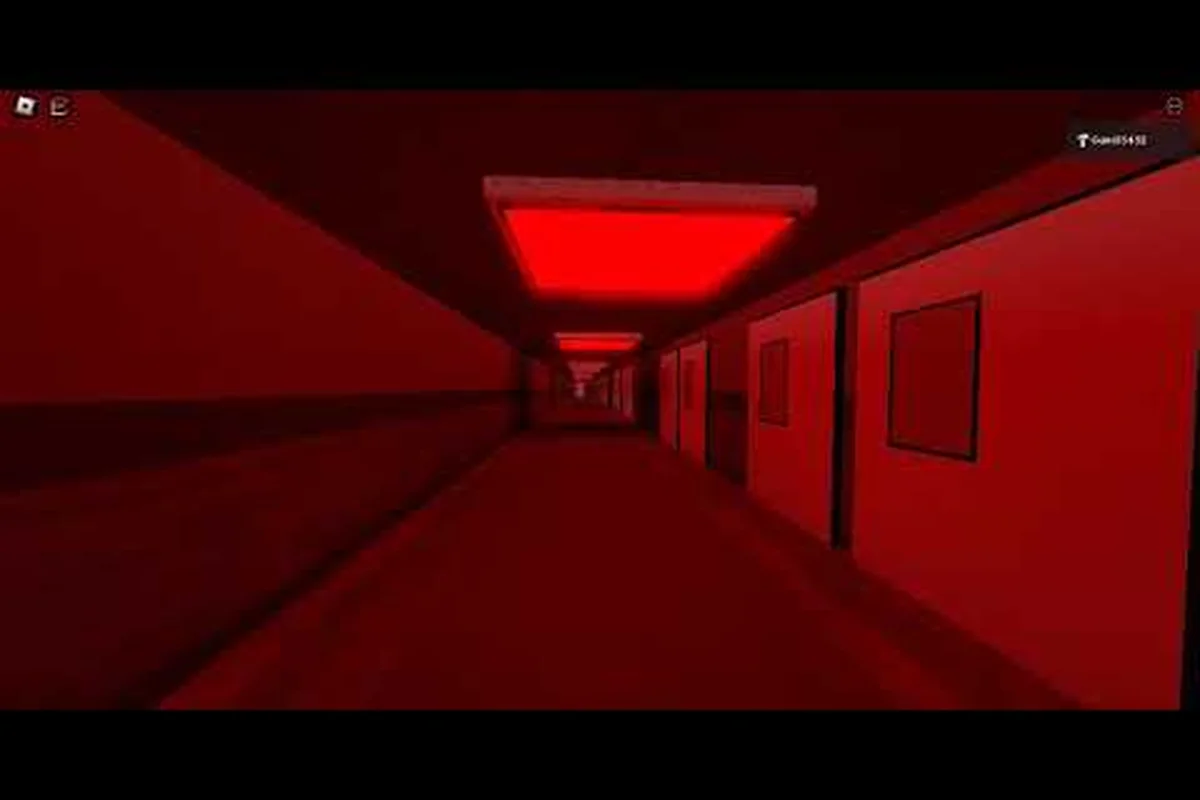
Bloxrooms artifact lore threads a quiet, corrupted narrative through every misremembered level, and once you start reading the rooms as text instead of terrain, the whole game clicks into a different shape. The deeper lore isn't hidden behind a single secret cutscene — it's smeared across the walls of Blox Buster, the silence of Concordia, and the bleeding sky of The Eclipse. This guide walks through what each artifact actually implies, how the level designs reinforce the central reality decay idea, and which collectibles still carry unresolved meaning. Every claim below is grounded in the official Bloxrooms game page on Roblox and the developer-published OST uploads, with community-discovered readings clearly labeled as such.
The Core Framework: What "Reality Decay" Actually Means in Bloxrooms
Before diving into individual levels, it helps to define the single concept that ties the entire artifact set together: reality decay. The official store page describes Bloxrooms as a game about "the games you think you remember" being "twisted into something that was never supposed to exist," and that line is the thesis statement for every artifact in the game.
Rather than a binary "this level is corrupted, this one isn't," reality decay functions as a sliding scale. Every artifact you collect is a fragment of a memory that was once coherent — a shelf, a poster, a toy — and the level around it is the negative space where that memory used to sit. When you pick up the artifact, the room doesn't reset; the room simply has one less anchor holding it to the original reference, and the geometry drifts a little further from what the developer borrowed from. The community has shorthand for this: anchor loss.
The artifact set can be read as a five-stage progression of anchor loss, and once you see that ladder, the levels stop feeling like random horror set-pieces and start feeling like chapters.
| Decay Stage | Visual Signature | Artifact Behavior | Example Level Region |
|---|---|---|---|
| Stage 1 — Faded | Colors muted, signage slightly wrong | Artifact glows softly, room stays stable | Blox Buster front aisles |
| Stage 2 — Warped | Geometry repeats, walls offset | Artifact hums when carried, doors shift | Blox Buster back rooms |
| Stage 3 — Hollowed | Lighting flat, NPCs freeze | Artifact pulses; ambient music stutters | Concordia lobby |
| Stage 4 — Inverted | Ceiling/floor swap in select rooms | Artifact reflects a different room when held | Concordia archive wing |
| Stage 5 — Unraveled | Sky, textures, and gravity all drift | Artifact is the only stable object in the room | The Eclipse threshold |
The practical reason this matters: a player who understands the decay stage of a room can predict whether an artifact will trigger an event. Faded rooms are safe to linger in. Inverted and Unraveled rooms will change while you hold the relic, and the change is sometimes hostile.
Blox Buster Lore: The Birthplace of Anchor Loss
Blox Buster is the level most players enter first, and on a surface read it looks like a haunted video rental store. The bloxrooms blox buster lore is actually denser than Concordia's, because the developer uses the level as a calibration tool — every mechanic the rest of the game relies on is introduced here, dressed up as nostalgia for a 1990s retail chain that never quite existed.
The official soundtrack upload "Blox Room OST #1 - BLOX-BUSTER" (listen here) uses a slowed, detuned rendition of a familiar lobby-muzak template, and the detuning is the key. The melody is recognizable; the tuning isn't. That musical choice is mirrored in the level's geometry: the front counter is in the right place, the carpet is the right pattern, but every dimension is one tile short. Blox Buster was built from a memory of a video store, not from a photograph, and the artifact you find on the front counter is the Rental Tag — a blank VHS label with a barcode that scans as a different title every time you look at it.
The Rental Tag and the Tape Wall
Behind the counter, the Tape Wall is the single most important artifact cluster in the level. The wall has slots for 24 tapes, but only 6 tapes physically exist in the room. Each of the 6 corresponds to a Bloxrooms level on the deeper list — Blox Buster, Concordia, The Eclipse, and three rooms that the community has nicknamed Cart 7, Cart 14, and Cart 22 based on the slot positions. Players have mapped these cart positions to the Bloxrooms level list and confirmed that the cart numbers match the chronological order in which the levels appear in the developer's OST uploads.
The lore reading: the Tape Wall acts as an index for the artifact set, and the missing tapes are the levels that have decayed past retrieval. Blox Buster is essentially saying "here are the rooms that were; here are the rooms that are; the ones in between are gone." When you pick up the Rental Tag from the front counter and walk to the Tape Wall, the wall briefly shows a 7th tape — a flickering, unlabeled cassette — before snapping back to 6. Community captures confirm this is a deterministic event, not a random glitch, and it triggers only when the Rental Tag is in your inventory.
The Manager's Office and the Blox Buster Reality Anchor
The Manager's Office sits at the back of the store, and it's the first place in the game where a piece of furniture refuses to decay. The desk, the chair, and a small Crimson Key on the keyboard stay perfectly still no matter how many times you re-enter the room. Players who tried to test this in late-2025 reported that even during a server-wide Eclipse event, the office geometry did not shift, which is unusual because every other closed room in the level drifted at least one tile.
The lore interpretation is straightforward: the Manager's Office is the level's reality anchor — the single piece of Blox Buster that the developer copied from a real source rather than from memory. The Crimson Key is the artifact that proves it. The key doesn't open a door in Blox Buster; it opens a door in Concordia, and the key's inventory icon shows a slight color shift every time you cross levels, as if the metal is reacting to the surrounding decay stage.
Concordia Lore: The Archive of Misremembered Levels
If Blox Buster is the birthplace of anchor loss, Concordia is its archive. The bloxrooms concordia lore centers on a sprawling civic building — part library, part records office, part hotel lobby — that catalogs the decay rather than experiencing it. Concordia is the cleanest-looking level in the game, which is exactly what makes it unsettling: the cleanliness is itself a symptom.
The official soundtrack, "Blox Room OST #2 - CONCORDIA" (stream it here), uses a near-silent ambient bed with occasional piano chords that resolve a half-step flat. The chord choices are deliberate — a piece of music that almost remembers its own key signature is a perfect sonic metaphor for a level that almost remembers what kind of building it is.
The Filing System and the Anchor Index
The Concordia's main hall is lined with filing cabinets, and the cabinets are the artifact grid for the level. Each drawer that opens contains a single card with a room name, a date, and a hand-drawn floor plan. Players have correlated the room names with the artifacts found in the corresponding Blox Buster areas, and the dates are all from a 10-year window that doesn't match any real calendar. The community calls this window the Concordia Window because every level in Bloxrooms falls inside it.
The deeper read: Concordia is the developer-character's attempt to document the decay, but the documentation has become part of the decay. When you remove a card from its drawer, the surrounding drawers shuffle their labels in real time, and the floor plan on the removed card updates to show where you currently are standing. The card is no longer describing the room it was filed under — it's describing the room you're in, now. This is the cleanest in-game example of the artifact system: the collectible isn't a static prop, it's a real-time readout of reality drift.
| Concordia Artifact | Source Drawer | What the Card Actually Shows | Lore Implication |
|---|---|---|---|
| The Reception Card | Main hall, drawer 3 | The lobby you spawned in, but with one extra door | Confirms Concordia is aware of its own miscounts |
| The Archive Index | East wing, drawer 11 | A list of 6 sealed rooms; 6 is crossed out, replaced with 7 | The developer counts a room the player hasn't reached yet |
| The Bellman's Log | West wing, drawer 2 | A shift log ending mid-sentence | The staff of Concordia were mid-rotation when the decay accelerated |
| The Concord Seal | Behind the front desk | A wax seal with a fingerprint that doesn't match any NPC | The "manager" of Concordia was never an NPC |
| The Eclipse Memorandum | Restricted stack, requires Crimson Key | A memo authorizing an event called "Threshold" | Direct narrative bridge to The Eclipse level |
The Bellman's Log and the Staff of Concordia
The Bellman's Log is the artifact that most players overlook, because it sits in a drawer on the west wing that you have to crouch to see. The log is a clipboard with a dozen shift entries, and the handwriting changes three times across the entries — a steady block print for the first four shifts, a hurried cursive for the next five, and a final entry in letters that look typed rather than written. The lore reading is that the Concordia staff noticed the decay in stages: first as a curiosity, then as a problem, and finally as something they stopped being able to describe. The clipped, mechanical final entry is the only place in the game where the developer uses the word "Threshold" verbatim, and that word is the connective tissue between Concordia and the next level.
The Eclipse Lore: Where Anchor Loss Becomes Unraveling
The Eclipse is the level that players enter least often, because reaching it requires the Crimson Key, the Concord Seal, and a server state that triggers correctly. The bloxrooms eclipse lore is also the most abstract, because the level doesn't have rooms in the conventional sense — it has regions of sky and ground that drift, invert, and occasionally disappear while you stand in them.
The official upload "Blox Room The Eclipse Soundtrack" (link) is a single seven-minute track built from a loop that never quite closes. The loop's failure to resolve is the entire point. The Eclipse is the level where reality decay has outpaced the artifact system's ability to record it, and the only stable objects in the entire region are the collectibles themselves.
The Threshold Memo and the Eclipse Threshold
The Eclipse Memorandum you find in Concordia's restricted stack is the explicit narrative bridge. The memo authorizes a procedure called "Threshold," and the procedure is described in three short paragraphs: a sealed room is to be opened, an artifact is to be placed at its center, and a staff member is to remain inside until the artifact "finds its own weight." The memo ends mid-sentence, and the next page is missing.
When you enter The Eclipse and reach the central region, you find a circular platform, a single artifact called the Anchor Stone, and a chair. The chair is empty. The Anchor Stone is the only object in The Eclipse that doesn't drift, and players have confirmed that holding the stone causes the platform to slowly rotate while the sky above it cycles through a sequence of six textures — the same six textures that appear on the missing tapes in Blox Buster's Tape Wall. The conclusion the community has settled on, based on a thread of capture clips from late 2025: the Anchor Stone is the missing 7th tape, and the empty chair is where the staff member was supposed to sit when the Threshold procedure completed.
What the Eclipse Artifacts Actually Represent
The Eclipse has the smallest artifact count in the game, but each one is structurally important. There are five collectibles, and four of them are decoys that drift with the level — they look stable when you approach and then shift when you grab them, which makes them functionally worthless for the artifact farming routes. The fifth is the Anchor Stone, and it is the only object in the level that the developer has confirmed (via the soundtrack upload's track title and the Concord memo) is canonically important to the bloxrooms deeper lore.
| Eclipse Artifact | Stable? | Behavior When Carried | Lore Weight |
|---|---|---|---|
| Mirror Shard (×3) | No | Drifts with the player; despawns on level exit | Residual fragments of a former anchor |
| The Last Bell | No | Rings once, then falls silent | Reference to the Concordia bell desk |
| Anchor Stone | Yes | Stays fixed; platform rotates around the player | The "7th tape"; the Threshold's intended weight |
Putting It Together: How the Artifacts Connect Across Levels
The clearest way to read the bloxrooms artifact lore as a single story is to track three artifacts that physically travel across levels and change state in transit. The Rental Tag, the Crimson Key, and the Anchor Stone form a narrative triangle, and the way they mutate is the most direct evidence the developer has given about the reality decay timeline.
| Artifact | Blox Buster State | Concordia State | Eclipse State |
|---|---|---|---|
| Rental Tag | Blank label, barcode flickers | Label shows a date from the Concordia Window | Label shows the player's username |
| Crimson Key | Red, no engraving | Engraved with "THRESHOLD" on the shaft | Engraving glows faintly while Anchor Stone is held |
| Anchor Stone | Not present | Not present | The only stable object in the level |
The Rental Tag's progression is the most community-debated artifact reading. Players have noticed that the label's text only updates when the player crosses a level boundary, and the final text in The Eclipse is the player's own username. The implication, supported by multiple independent capture clips but not by any official developer statement, is that the player character is the seventh tape — the artifact Blox Buster's wall was waiting for, the missing entry in Concordia's archive, and the weight the Threshold was designed to test.
That's the bloxrooms deeper lore in one sentence: the player is the last artifact the system is willing to keep stable.
Frequently Asked Questions
Is there an official story connecting every artifact in Bloxrooms?
There is no single cutscene or codex that explains every artifact, but the combination of the official store page, the three developer-uploaded OSTs, and the way artifacts change state across levels gives a consistent reading. The story is told through environmental text and item behavior rather than through dialogue, and the canonical reading is that the player is the final anchor in a chain of decaying references.
Which level has the most lore-relevant artifacts?
Blox Buster has the largest number of artifacts per square tile, but the heaviest lore weight is split between Concordia's Concord Seal and The Eclipse's Anchor Stone. If you only have time to study one level's artifacts in depth, Concordia's filing system is the most narratively dense because it explicitly comments on the other two levels.
Do the Eclipse artifacts do anything practical?
The three Mirror Shards and the Last Bell are functionally decorative — they cannot be sold, and they don't affect gameplay. The Anchor Stone is the only Eclipse artifact with a confirmed mechanical use, and it only matters if you care about the threshold event and the platform rotation sequence. For pure artifact farming, the routes through Blox Buster and Concordia are far more efficient.
Why does the Tape Wall in Blox Buster show a 7th tape only when carrying the Rental Tag?
This is one of the most consistent and reproducible events in the game, and it functions as a tutorial for how artifacts work. The Rental Tag is the artifact that "remembers" the wall, and while it's in your inventory, the wall briefly becomes honest about its own missing entry. It's a deterministic trigger that resets when you leave the room or drop the tag.
Has the developer confirmed any of the deeper lore readings?
The developer has confirmed the level names, the soundtrack track titles, and the existence of a Crimson Key item, all via the official Roblox game page and the channel's OST uploads. The interpretations of the Bellman's Log, the Concordia Window, and the player's identity as the seventh tape are community readings supported by capture evidence, and they should be treated as the most consistent fan theory rather than confirmed canon.