
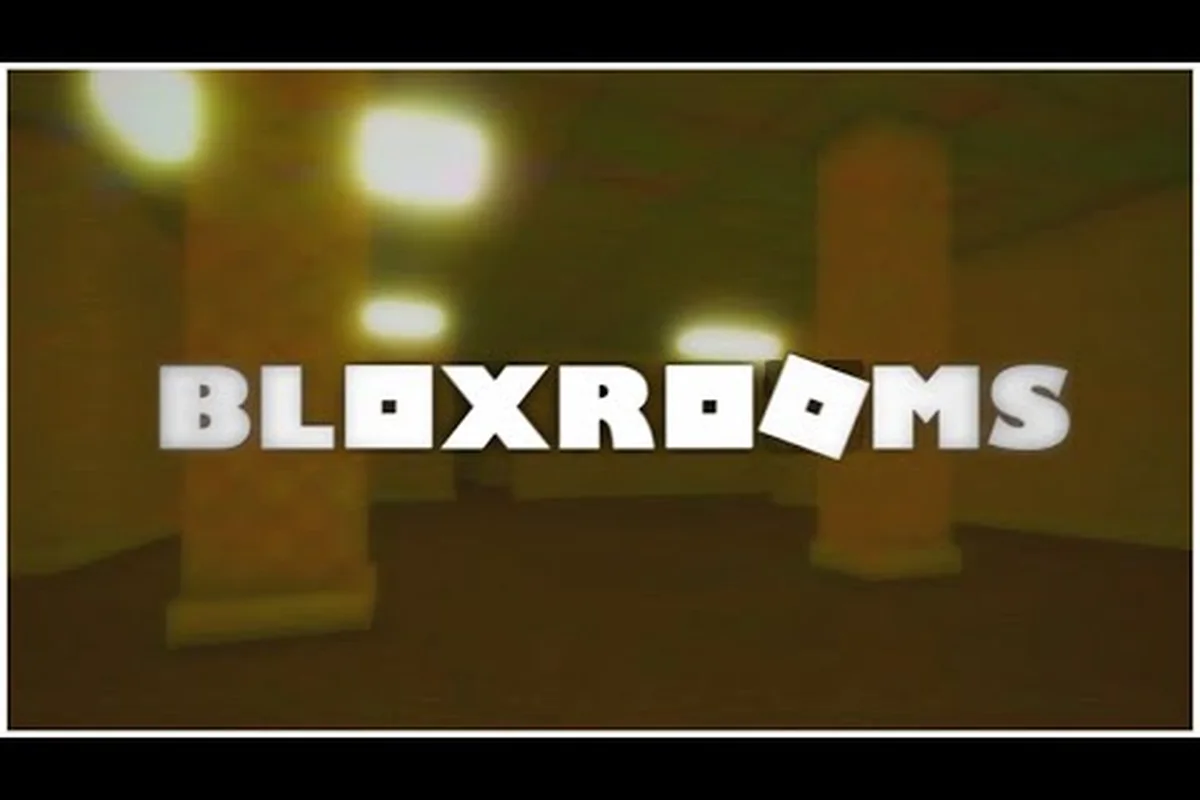
Bloxrooms backrooms lore sits at the intersection of the Backrooms mythos and the Kane Pixels video series, and that blend is exactly what makes the game feel like a corrupted memory rather than a standard Roblox horror map. According to the official Bloxrooms page on Roblox, the experience is built around "endless misremembered levels," a phrase that quietly rewires how players should interpret every warped classroom, lobby, and hallway they stumble into.
This article breaks down the foundational story of the Bloxrooms backrooms lore, unpacks the level design choices that consciously echo Kane Pixels' Found Footage series, and reveals the secret connective tissue — recurring room numbers, liminal mascots, and audio stingers from the ASYNC dimension tapes — that link individual Bloxrooms levels to each other and to the broader Backrooms universe beyond Roblox.
The Core Story of Bloxrooms Explained
Bloxrooms story explained, at its simplest, is the tale of a player who keeps waking up in places they almost recognize. The opening pitch — taken directly from the developer's own framing — describes the game as a place where "the games you think you remember" get twisted into something that was never supposed to exist. That single sentence is the spine of the entire experience.
The Bloxrooms Corporation, the in-fiction developer entity, is presented as a bureaucratic body that has catalogued, contained, and — controversially — monetized these misremembered spaces. Players aren't really "explorers" in the heroic sense; they are scavengers who enter these rooms, collect artifacts, and trade them back for cash and gear. This shifts the player from protagonist to something more like an asset recovery specialist, which fits the Backrooms-adjacent framing beautifully.
| Story Element | In-Game Manifestation | Lore Implication |
|---|---|---|
| Misremembered levels | Levels that resemble familiar real-world spaces | Memory itself is unstable inside the Bloxrooms |
| The Corporation | Provides cash and gear in exchange for artifacts | Someone benefits from keeping the loop going |
| Entities | Enemies that break the established rules of each level | The corruption is sentient, not random |
| The Cash Loop | Selling artifacts funds deeper exploration | Progress is bought, not earned |
The cash-for-artifacts loop is more than a gameplay device. It implies that the Corporation understands what is happening inside these rooms but chooses to incentivize players to keep going deeper. The deeper you go, the more you change, and the more you change, the less likely you are to leave. That is a classic Backrooms beat, and Bloxrooms leans into it without ever spelling it out.
The Kane Pixels Connection at the Heart of the Game
The bloxrooms kane pixels reference is the single most important cultural key for understanding what this game is actually doing. Kane Pixels' Backrooms video series, which popularized the modern Backrooms aesthetic on YouTube, treated the spaces as ASMR-clean corporate environments that slowly curdle under the weight of something wrong. Bloxrooms borrows that exact tonal recipe.
Where most Backrooms games go for the wet carpet and yellow wallpaper look, Bloxrooms makes a different choice: it borrows the vibe of a place you have personally been. The game starts in rooms that feel like a school, a movie theater, a Blockbuster-style video store, or a transit hub. The references are smeared, not stamped. That smeared quality is what the developer means by "misremembered" — the spaces are pulling from cultural memory rather than from any single piece of media.
A useful way to map the influence is to compare the structural beats side by side: pull the five-act spine of Kane Pixels' ASMR-clean descent (infinite office → entity breach → ticking-clock escape → exit denial → recursion) and lay it next to the bloxrooms backrooms lore loop of lobby walk → rule-breaking NPC encounter → sell-artifact economy grind → floor unlock → deeper misremembered floor. The shapes rhyme almost beat-for-beat, which is why the bloxrooms kane pixels reference reads as an homage rather than a reskin, and why the bloxrooms backrooms connection survives scrutiny even when the visual fidelity is clearly Roblox-budget.
| Kane Pixels Backrooms Beat | Bloxrooms Equivalent | Why It Works |
|---|---|---|
| The office that goes on forever | Misremembered corporate lobbies | Familiar authority turned uncanny |
| The entities that breach the rules | Rule-breaking in-level entities | Sanity collapse as gameplay |
| ASMR-clean cinematography | Clean geometry, harsh lighting | Comfort weaponized against the player |
| Ticking-clock tension | Cash-and-upgrade economy | Dread becomes motivation |
| The exit that never arrives | Deeper floors unlocked by selling artifacts | Escape is the bait, not the reward |
Players who recognize the series immediately feel the pull. Players who don't, still feel the wrongness, because the design works on a memory layer beneath conscious reference. That dual-audience design is rare in Roblox horror, and it is the reason the bloxrooms backrooms connection feels earned rather than piggybacked.
How the Misremembered Levels Function as Lore
Bloxrooms lore explained through its levels is a smart narrative trick. Instead of dumping exposition in a hub area, the game lets you decode the story from environmental cues. The officially released soundtrack uploads — like Blox Room OST #1 — BLOX-BUSTER and Blox Room OST #2 — CONCORDIA — confirm that BLOX-BUSTER, CONCORDIA, and The Eclipse each function as named, themed "misremembered" locations. These are not just map names; they are lore chapters.
Each level seems to represent a category of memory: BLOX-BUSTER maps onto consumer-culture recall (Blockbuster stores, VHS aisles, pop-culture signage), CONCORDIA encodes civic and public-space memory (transit halls, plazas, the Latin notion of harmony), and The Eclipse evokes cosmic, liminal states where time and rules feel suspended. The soundtrack uploads — BLOX-BUSTER, CONCORDIA, and the dedicated Eclipse track — reinforce that split, giving every misremembered zone a distinct emotional palette and a specific entity-behavior pattern that the surrounding table makes explicit.
-
BLOX-BUSTER: a video-rental store that never existed exactly as you remember it. It feels like a Blockbuster, but the layout is wrong, the aisles go on too long, and the color grading is a touch too warm. Players report that the VHS boxes in the back contain hints about the Corporation's true purpose.
-
CONCORDIA: a transit or civic space (the name suggests "harmony" in Latin), which the soundtrack paints as the calmest and most architecturally clean level. That calm is the trap; the entities here are quieter, not absent.
-
The Eclipse: confirmed by the official Eclipse soundtrack upload to be a special level with its own dedicated music. Eclipses in the Backrooms tradition usually signal a state change in the world — a moment when the rules pause and the entities are free to roam.
| Level | Memory Category | Soundtrack Tone | Entity Behavior |
|---|---|---|---|
| BLOX-BUSTER | Consumer / pop culture | Warm, slightly distorted | Aggressive but patterned |
| CONCORDIA | Civic / public space | Clean, almost ASMR | Silent, then sudden |
| The Eclipse | Cosmic / liminal | Dark, low-frequency | Rule-bending, unpredictable |
If you want a deeper read on how these locations fit into a chronological arc rather than a hub list, the bloxrooms lore timeline breakdown maps the level order to the story beats they appear to reveal.
The Bloxrooms–Backrooms Connection Beyond the Aesthetic
The bloxrooms backrooms connection is more than wallpaper and fluorescent lighting. The game borrows a few structural ideas directly from the broader Backrooms mythos — the idea of a level system, the idea of no-clipping, the idea that some entities are bound to specific rooms and can only hurt you when the rules of that room apply. Bloxrooms layers a Roblox-appropriate economy on top, but the bones are Backrooms.
Wiki-savvy players will recognize the levels by their function before they ever read a sign: the lobby acts like Level 0, the maintenance tunnels echo the damp crawlspaces of Level 1, and the party rooms of the Habbo Hotel sublevel retool the 2004 internet creepypasta aesthetic that the Backrooms meme is actually built on. Rather than inventing new rules, the developers are leaning on two decades of communal folklore — meaning the "discovery" feels less like learning and more like remembering a game you never actually played, which is exactly the uncanny emotional register the Backrooms is famous for.
-
No-clip as a metaphor for falling into a memory you never had. The Roblox character doesn't fall out of the world; they fall into a memory that doesn't belong to them.
-
Entities as glitches in someone else's recollection. When an entity breaks the rules, it is signaling that the memory being expressed is fundamentally unstable.
-
Levels as emotional states. The warmer the level, the more dangerous the nostalgia. The colder the level, the more rational the threat.
This is also where the game distinguishes itself from the average Backrooms clone. Most Roblox experiences in this genre just copy the level names and call it lore. Bloxrooms seems to be treating each level as an emotional argument about why people get stuck in the Backrooms in the first place. The answer the game keeps returning to: people stay because the spaces feel like the lives they thought they had.
For a side-by-side look at how Bloxrooms' no-clip economy, per-entity binding rules, and level-to-emotional-state mapping compare against the more prominent Backrooms titles on Roblox, the bloxrooms backrooms game comparison article walks through the design trade-offs level by level — including which competitors borrow from Kane Pixels' found-footage treatment versus which go full Habbo nostalgia, and where Bloxrooms' "memory-as-lore" framing is genuinely different from the level-name reskins.
The Role of Entities and Why They "Break the Rules"
Entities are the most important lore delivery system in Bloxrooms, because they are the only thing in the game that openly contradicts the level design. A classroom looks like a classroom until something runs across the ceiling. A transit hall looks like a transit hall until the lights begin to strobe in a pattern that no electrical fault would produce. These violations are the lore.
The most cited community observation, drawn from player reports on the official Bloxrooms trailer and the Discord channels that followed its release, is that the entities do not attack randomly. They attack in patterns that mirror the function of the level:
-
In consumer spaces (like BLOX-BUSTER), entities behave like overzealous staff — herding, redirecting, blocking aisles.
-
In civic spaces (like CONCORDIA), entities behave like silent commuters — present but unacknowledged, which makes them harder to track.
-
In cosmic/liminal spaces (like The Eclipse), entities abandon mimicry entirely and simply violate the level's rules in obvious, theatrical ways.
| Entity Behavior Type | Level Archetype | Threat Pattern | Lore Read |
|---|---|---|---|
| Mimic | Consumer spaces | Herding and chasing | Memory is being curated |
| Silent | Civic spaces | Ambush, proximity | Memory is being surveilled |
| Rule-breaker | Liminal spaces | Direct violation | Memory has collapsed |
That last column is the key. The game appears to use entity behavior to dramatize what is happening to the player's own memory inside the loop. The more stable the memory, the more polite the entity. The more degraded the memory, the more aggressive the rule-break. Players chasing the deeper lore use this as a compass: if the entities are calm, the level is early in the corruption cycle; if the entities are theatrical, you are already past the point of safe return.
How Lore Is Delivered Outside the Game
Bloxrooms lore is also delivered through a handful of off-platform channels, and recognizing them is part of doing the homework. The official ItsKenobi trailer sets the tone with a single unbroken shot through a series of misremembered spaces. The Bloxrooms channel then releases standalone OST uploads for each level, which double as lore reveals because the track names are level names. The Eclipse's dedicated soundtrack upload is the clearest example: the track itself is a piece of worldbuilding, not background music.
Players who want to survive the loop rather than just decode it should bookmark the bloxrooms survival guide alongside this lore piece — the two are designed to be read together, because the Corporation's in-fiction economy only makes sense once you understand what the game is metaphorically charging you for.
Frequently Asked Questions
Bloxrooms backrooms lore — what is the game actually about?
Bloxrooms is about waking up in places you almost remember, scavenging artifacts, and trading them to the Bloxrooms Corporation for cash. The deeper you go, the more the spaces change, and the more the entities in those spaces stop following the rules. According to the official page, the entire experience is framed around "endless misremembered levels," which is a Backrooms-style conceit dressed up in Roblox horror clothing.
Is Bloxrooms connected to the Kane Pixels Backrooms series?
Yes, but the connection is tonal rather than literal. The bloxrooms kane pixels reference shows up in the clean geometry, the ASMR-flavored lighting, the rule-breaking entities, and the slow-burn dread. The game does not name characters or recreate specific scenes from the YouTube series; instead, it borrows the feeling of the series and applies it to rooms drawn from everyday Roblox-player memory.
What is a "misremembered level" in Bloxrooms?
A misremembered level is a room or zone that resembles a real-world space — a video store, a school, a transit hub — but is warped in subtle ways: wrong layout, wrong lighting, wrong proportions. Lore-wise, these levels represent memories that the player does not actually have, which is why they feel familiar but cannot be pinned down.
Who is the Bloxrooms Corporation in the story?
The Bloxrooms Corporation is the in-fiction entity that catalogs, contains, and profits from the misremembered levels. It pays players in cash for recovered artifacts and sells them upgrades to go deeper, which establishes a clear conflict of interest: the Corporation benefits from players who never come back.
Does Bloxrooms have a secret ending tied to the lore?
The community has not confirmed a single canonical ending, but the bloxrooms ending analysis article tracks the leading theories. The strongest fan reading is that the "ending" is a state change rather than a cutscene — a moment when the player stops being a scavenger and becomes part of the memory the Corporation has been curating all along.