
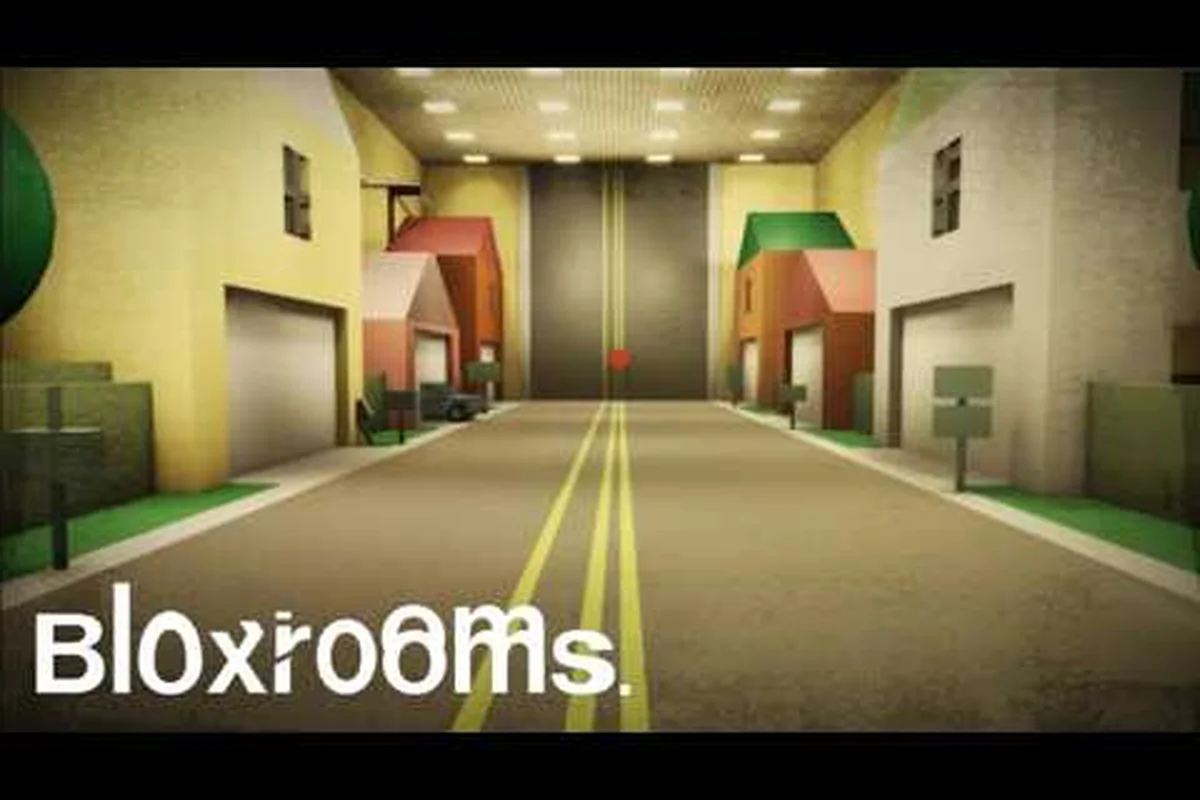
Walking into Bloxrooms for the first time feels less like loading a level and more like stepping into a half-remembered dream that keeps rearranging the furniture. Every corridor bends, every doorway opens onto a scene you cannot quite place, and the answer to "where am I going?" changes the moment you turn a corner. That sensation is not a bug; it is the core hook of the game. Understanding bloxrooms how rooms connect is the difference between running in panicked circles and reading the map like a liminal-space cartographer, because the generation rules quietly decide which entity you meet, which artifact you find, and how far you can push before the geometry resets around you.
This guide breaks down the bloxrooms room generation system that powers those endless misremembered levels, the path logic that decides your next doorway, and the practical tricks experienced players use to navigate the bloxrooms endless map without losing their gear, their nerve, or their sense of direction. You will get a clear sense of the bloxrooms map size, learn why "how big is the map" is almost the wrong question to ask, and pick up a few bloxrooms map secrets that turn dead ends into shortcuts.
The Core Generation Loop Behind Bloxrooms
The first thing to internalize is that bloxrooms how rooms connect is not a static stitched-together level. The game streams a sequence of pre-authored "room chunks" into a runtime that picks the next piece based on rules, not random chaos. The official description on the Bloxrooms Roblox game page frames the experience as "endless misremembered levels," which is a useful mental model: each room is a fragment of a level you might have played before, twisted just enough to feel wrong.
How Are Rooms Generated at Runtime
When you load into a server (a 30-player instance, according to current community data), the host seeds a generation graph. From that seed, the engine pulls from a pool of room templates tagged with metadata: theme (carpet office, pool zone, hotel lobby, school hallway, mall atrium), difficulty tier, entity spawn weight, and exit socket count. The bloxrooms how are rooms generated pipeline essentially runs four steps every time you cross a threshold.
| Step | What Happens | Why It Matters |
|---|---|---|
| 1. Seed read | The session reads a seed value (sometimes derived from server time, sometimes from player count) | Same seed = same path on rerun, useful for artifact farming routes |
| 2. Room pick | Engine pulls a room template matching the current theme band and difficulty ceiling | Higher-tier rooms hide better gear but unlock new entity types |
| 3. Socket match | The open door of your current room is matched to a compatible exit socket in the next template | Doors only connect to doors that "make sense" for the room pair |
| 4. Modifier pass | A second pass adds misremembered flavor: flipped textures, missing walls, entity spawn swaps | This is why the bloxrooms endless map never feels repetitive even when it technically is |
The socket-matching step is the real heart of the question. Every room template declares which kind of door it expects on each face (a "north socket," a "south socket," a "branch socket"). The engine refuses to glue two rooms together unless the sockets agree, which is why you can stand in a carpet hallway and the next doorway will reliably drop you into another carpet hallway, a hotel suite, or a rec room, but never (for example) directly into a rooftop with no transition.
Why The Map Feels Endless
Players often ask about bloxrooms how big is the map, and the honest answer is that there is no single fixed size. The pool of room templates is finite, but the generation graph is not, because once you cross a certain depth the engine re-arms earlier themes with new modifiers. That is the trick behind the bloxrooms endless map reputation: the rooms recycle, the misremembered twist makes them feel new, and the path continues to branch long after you have seen every template. Community reports describe runs lasting anywhere from 20 minutes to well over an hour, with the longest sessions generally tied to artifact-hunting routes rather than pure exploration.
This also explains why the bloxrooms map size is best described as a difficulty curve rather than a square mileage. Each "floor" of the generation graph corresponds to a difficulty band, and each band reuses the same template families with higher entity weights, lower light, and a tighter artifact economy. You are not walking further; you are walking deeper.
The Path Rules That Decide Your Next Doorway
Once you accept that the geometry is generated, the next layer to crack is the set of rules that decides which of several doorways the game presents to you. This is where the real bloxrooms how rooms connect knowledge lives, because the path rules are not random; they are weighted, and a smart player can read the weights.
The Three Door Types You Will See
Most rooms in Bloxrooms present you with one to three exits, and they are not created equal. Understanding the three door types is essential to mastering the bloxrooms room generation flow.
| Door Type | Visual Cue | What It Usually Leads To |
|---|---|---|
| Main corridor | Long, well-lit, often carpeted | Continues the current theme, lowest entity density, most loot per step |
| Branch | A narrower side door, sometimes half-hidden | Detour room, higher artifact chance, but also higher entity spawn rate |
| Locked | Heavy double door or gated entry | Boss-tier or high-tier gear room, requires a key artifact or specific progression |
When you read the room's exit sockets through this lens, the bloxrooms how rooms connect logic stops feeling like guesswork. The main corridor is almost always a safe forward push; the branch is the risk-reward play; the locked door is a long-term goal you prep for over several rooms. For a deeper look at how room layout and navigation actually play out in practice, the bloxrooms map guide breaks down corridor patterns by theme.
The Sibling Room Concept
One of the more interesting pieces of bloxrooms map secrets lore is the "sibling room" pattern. Two rooms generated from the same seed step will often share a hidden connection: a crawlspace vent, a maintenance hatch, a back stairwell that the main corridor does not show you. Sibling shortcuts are not advertised by the UI, but experienced players report spotting them by looking for repeated texture motifs, matching wallpapers, or identical lighting rigs in two rooms that the main path treats as separate branches.
Finding a sibling shortcut is one of the strongest bloxrooms map secrets you can pick up, because it collapses two branches of the generation graph into a single loop, which means faster artifact farming and a safer escape route when an entity is on your trail.
How Big The Map Actually Feels
Because the bloxrooms endless map is procedural, "size" is really a question about session length, room diversity, and how deep the difficulty curve can go before you reset. Community testing shared across YouTube and Discord reports a fairly consistent shape, even if exact numbers vary by patch.
A Practical Map Size Reference
| Metric | Typical Range (single session) | What Changes It |
|---|---|---|
| Rooms traversed per run | 40–90+ | Whether you take branches or stick to main corridors |
| Distinct themes encountered | 5–8 of the active pool | Seed and server population |
| Difficulty bands crossed | 2–4 per run | Gear quality and entity encounters |
| Session length | 20–75 minutes | Player choice: explore vs. rush to extract |
| Boss rooms encountered | 1–3 per run | Whether you have the prerequisite key artifacts |
The "how big is the map" answer most veterans give is that the map is exactly as big as your curiosity and your caution allow. A player who sprints the main corridor will see a tight, repeatable loop of 40-ish rooms. A player who reads the branch doors and hunts for sibling shortcuts will routinely crack 80 rooms in a single sitting, which is the practical upper bound most survivors report. The number keeps creeping up because the pool of misremembered templates expands with each update, and the September 2026 patch notes reference additional room variants and a new theme band.
Practical Navigation Strategy And Map Secrets
Knowing the rules is only half the work; the other half is turning that knowledge into a run that ends with your gear intact. The following section covers the practical moves that separate new explorers from the players who reliably extract with full inventories.
Reading A Room Before You Cross It
Every doorway in Bloxrooms telegraphs what is on the other side, and learning to read the signals is one of the more valuable bloxrooms map secrets you can build into your playstyle. A doorway with dim warm light usually leads to a low-entity theme continuation; a doorway with flickering blue-white light usually means an entity-heavy branch; a doorway with a faint hum and a glowing frame is almost always a locked boss-room entrance. The engine also tends to place the safest exit opposite the most decorated wall, because the geometry is authored, not random.
| Room Signal | Most Likely Path | Risk Level |
|---|---|---|
| Warm steady light, carpeted floor | Main corridor, same theme | Low |
| Flickering light, exposed pipes | Branch, new theme | Medium |
| Glowing frame, faint hum | Locked door, boss-tier | High |
| Vent grate in the corner | Possible sibling shortcut | Variable |
| Mirror, repeated wallpaper, identical lighting | Likely sibling of a nearby room | Variable |
For a focused look at the safest corners and extraction-friendly geometry, the bloxrooms safe spots article maps out the high-confidence hiding and healing rooms by theme. Pairing that read with a quick scan for the door signals above is the fastest way to plan two or three moves ahead.
Building A Route, Not Just Reacting
The most consistent mistake new players make is treating the bloxrooms endless map as a series of single-step decisions. The veterans who extract most reliably are building a three-room mental map at every junction: where they are, what the two most likely next rooms are, and which of those rooms is the better setup for the room after that. That is the same logic a chess player uses when planning two moves ahead, and it works because the generation graph is weighted, not random.
A simple working loop looks like this:
-
Step 1 — Identify your current theme band. Carpet office, hotel, school, pool zone, mall. Each band has a known entity roster and a known artifact economy.
-
Step 2 — Pick your commitment. Decide whether this junction is a "push forward on the main corridor" or a "branch and loot" decision. Mixing the two at every doorway burns your gear.
-
Step 3 — Watch for the sibling cue. Scan for repeated wallpapers or mirrored geometry. If you see a likely sibling, the path becomes a loop instead of a dead end.
-
Step 4 — Save locked doors for later. A locked door is a goal, not an emergency. Note the room and come back with the right key artifact rather than brute-forcing it.
This loop is the practical answer to bloxrooms how rooms connect at the level that actually matters: not "which door does the engine pick," but "which door should I take given the engine's weights." If you want a more granular look at how progression layers on top of navigation, the bloxrooms level progression guide covers the difficulty-band transitions that shape each run.
The Hidden Layer: Map Secrets And Edge Cases
Once you have the basics down, there is a deeper layer of bloxrooms map secrets worth knowing. None of these are guaranteed exploits; they are patterns reported by players across multiple sessions, and they tend to be most useful when you are already deep into a run and need an edge.
Recursive Loops And The "Anchor Room" Trick
The generation engine occasionally produces a rare path: a room that loops back into itself after a small number of steps, instead of branching outward. These anchor rooms are useful for artifact farming because they reset quickly and reliably, which means you can chain runs without spending long stretches navigating. Veteran players report identifying anchor rooms by their unusually symmetrical layout and their tendency to have exactly two doors, neither of which is a locked door.
| Pattern | How To Spot It | Why It Helps |
|---|---|---|
| Anchor room | Two-door symmetrical layout, mid-tier lighting | Fast reset for artifact farming routes |
| Sibling loop | Two rooms sharing texture, connected by vent or hatch | Collapses two branches into one safe loop |
| Theme pivot | Sudden shift from one theme to a related one (mall to food court) | Predicts the next difficulty band shift |
| Dead-end stash | A branch with no exit but unusually high artifact density | Last-resort loot, useful when extract is blocked |
The Endless Map Paradox
A final piece of the bloxrooms how rooms connect puzzle is the paradox at the heart of the endless map: the deeper you go, the more the path rules tighten, and the more the path rules tighten, the more predictable the generation becomes. Skilled players use that predictability to plan longer routes, while newer players tend to feel the opposite, because the misremembered flavor makes familiar rooms feel unfamiliar. The map is endless in the sense that the geometry keeps coming; it is finite in the sense that the templates and the weights are learnable.
A useful exercise is to pick one theme band (say, the hotel) and run the main corridor loop five or six times in a row. You will start to notice which rooms appear at which positions in the loop, which doors tend to be branches, and which door signals predict a sibling shortcut. That kind of pattern literacy is the closest thing the game has to a "map," and it is the foundation every solid run is built on.
Frequently Asked Questions
Does Bloxrooms have one big map or many small maps?
Bloxrooms uses one large procedural system rather than separate hand-built maps. Each session is generated from a pool of pre-authored room templates stitched together by the path rules, which is what creates the bloxrooms endless map feel. The official game page describes the experience as endless misremembered levels, and the system supports that by re-arming earlier themes with new modifiers instead of running out of content.
How are rooms connected in Bloxrooms?
Rooms are connected through a socket-matching system. Each room template declares exit sockets on its faces, and the bloxrooms room generation engine only glues two rooms together when their sockets agree. That is why you reliably step from a carpet hallway into another carpet hallway, a hotel suite, or a rec room, but not directly into a rooftop with no transition. Doors also carry metadata about theme band and entity weight, so the connection logic is weighted rather than fully random.
How big is the Bloxrooms map?
There is no single fixed number, because bloxrooms how big is the map depends on how you play. A sprint-focused main-corridor run typically covers 40-ish rooms in 20–30 minutes, while a branch-heavy exploration run with sibling-shortcut loops can push past 80 rooms in an hour or more. The session cap is set by your gear, your caution, and how deep the difficulty curve climbs before you decide to extract.
Are there secret rooms or shortcuts in Bloxrooms?
Yes. The two most consistent bloxrooms map secrets are sibling shortcuts and the rare anchor-room loops. Sibling shortcuts are hidden vents, hatches, or back stairwells that connect two rooms generated from the same seed step, and they are usually signalled by repeated wallpaper, mirrored lighting, or matching texture motifs. Anchor-room loops are symmetrical two-door rooms that reset quickly, which makes them strong artifact-farming setups.
Where can I watch real Bloxrooms runs to see the room connections in action?
A high-view-count walkthrough titled Roblox's Most Unique Backrooms Game (Bloxrooms) by Imadumbo shows real gameplay of the run-or-hide survival loop, the room transitions, and the entity encounters, which is the fastest way to see how the bloxrooms how rooms connect rules play out in practice.