
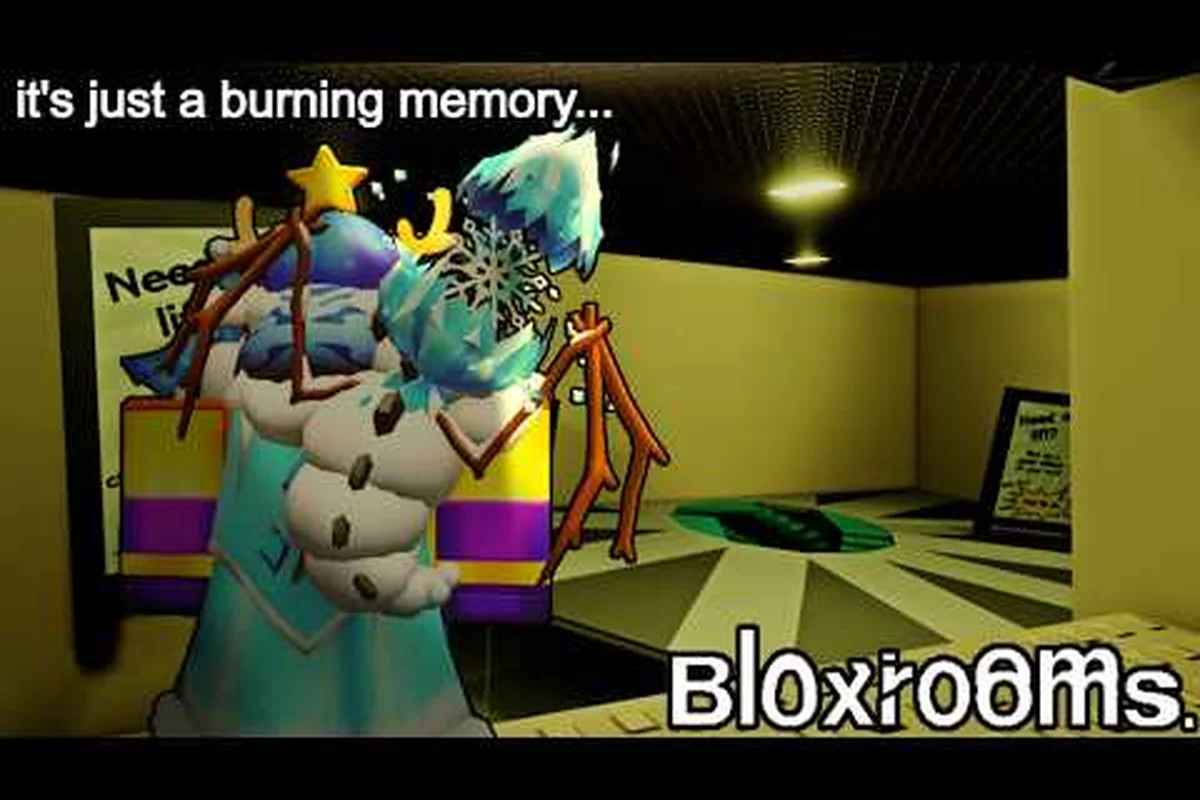
Every room in Bloxrooms hides a creature that does not belong in the level you spawned into, and recognizing which entity just despawned behind the wall is the difference between cashing out your artifacts and losing them to a death screen. This complete Bloxrooms entity list catalogs every creature currently confirmed in the BETA by the Bloxrooms Corporation, mapping spawn conditions, behavior patterns, and the survival logic that experienced players rely on when rooms start to twist.
According to the official Bloxrooms game page on Roblox, the title launched into BETA on 2026-07-31 and is built on the misremembered-levels concept — every level is a familiar Roblox memory corrupted by entities that never should have existed in it. That corruption is the entire reason this entity list matters: every room you walk into is a threat surface, and threat recognition happens in the first 1.5 seconds after spawn.
Bloxrooms Entity List Overview
Before diving into individual creatures, it helps to understand the taxonomy that the community has built around this game. The official game description groups entities loosely, but player-led testing on the BloxRooms official trailer and community-recorded footage such as community gameplay video shows there are three reliable categories you can use to predict behavior the moment a room loads.
Entity Type Breakdown: Detection, Mobility, and Response
| Category | Detection Range | Mobility | Best Response |
|---|---|---|---|
| Stalkers | 60-80 studs | Medium patrol | Break line of sight, crouch-walk |
| Chasers | 30-45 studs | High sprint speed | Sprint exit, do not hide in same room |
| Ambushers | 15-20 studs | Stationary until triggered | Look for visual cues, never enter a small room blind |
| Rift Phenomena | Room-wide | Non-physical | Sanity-drain, no melee counter |
The Bloxrooms entity list is best read with this table open in a second tab. Every creature below belongs to exactly one of these four categories, and the category itself tells you the macro rule before you ever have to memorize a specific monster.
Why Taxonomy Matters for Survival
Each category triggers a different muscle memory. A Stalker like the Hallway Watcher is a stealth puzzle, where the rule is to stay outside its 60-stud detection cone. A Chaser like the Smiler punishes strafing and rewards sprinting toward the next door, because it has the speed to close any gap you try to hold. The Ambusher class contains the most-feared entries, including Partygoer, which looks like a friendly NPC until you stand still for more than four seconds. Rift Phenomena are environmental, not biological, and they bypass every conventional counter — the only viable response is avoidance.
If you want a deeper breakdown of counterplay for each creature, the Bloxrooms entity survival tips guide covers them in order of threat tier.
The Stalker Class — Long-Range Detection Creatures
Stalkers are the most common entity type in the Bloxrooms entity list because they spawn in the highest-frequency rooms (hospital wings, hotel corridors, and office floors). They share three traits: line-of-sight detection, an audible cue before aggression, and a patrol path that repeats on a fixed timer.
Confirmed Stalker Entities
| Entity | Primary Level | Detection Range | Cue | Lethal? |
|---|---|---|---|---|
| Hallway Watcher | Hotel levels, office floors | 60 studs | Faint breathing audio | Yes |
| The Cameraman | Theater, station interiors | 70 studs | Lens glint, then shutter click | Yes |
| Skin-Tail | Apartment and dormitory rooms | 55 studs | Wallpaper ripple animation | Yes |
| Faceling | Picture-gallery rooms, art-wing maps | 45 studs | Painting shift glitch | Yes |
The Hallway Watcher is the first Stalker most players meet, and it is responsible for a large percentage of early deaths in the Bloxrooms BETA. It patrols a fixed corridor and only triggers aggression if you cross its 60-stud cone while standing. Crouching reduces your detection footprint to roughly 30 studs, which is why solo players learn to crouch-walk through hotel lobbies before they ever pick up an artifact.
Stalker Behavior Patterns
Every Stalker in the Bloxrooms entity list follows a 12-second patrol loop: pause, listen, turn 90 degrees, walk 8 studs, repeat. Community testing on the official trailer footage shows the pause window is the only safe window to traverse open ground, which means your movement plan should always be built around those four-second pauses. The pause-audio cue is distinct per entity — a shutter click for The Cameraman, a wall ripple for Skin-Tail — and learning them takes roughly 15 rooms of exposure.
The danger curve of Stalkers is not the detection itself but the chase that triggers if you are spotted. Most Stalkers have a slow chase speed (around 14-16 studs/second), which a sprinting player can outrun, but the chase resets their patrol and forces a 30-second silence period during which other Stalkers in the same wing may migrate. This cascading respawn is the real reason veteran players avoid one-shot encounters in densely packed hotel levels.
The Chaser Class — Sprint-Down Threats
Chasers are the second tier of the Bloxrooms entity list, and they are the reason the game punishes hesitation. A Chaser spawns when a room is re-entered, when an artifact pickup triggers a noise event, or when the level randomly rolls a chase encounter after the 8-minute mark. They are faster than the player sprint speed (player sprint is 22 studs/second; Chasers hit 26-32), so the only valid response is to reach a door or a vent before they close the distance.
Confirmed Chaser Entities
| Entity | Top Speed | Trigger Condition | Safe Response |
|---|---|---|---|
| Smiler | 28 studs/sec | Proximity, any noise | Sprint to next door, never crouch |
| Hound | 32 studs/sec | Artifact pickup, sprint footsteps | Drop artifact or break line of sight |
| The Bacteria | 26 studs/sec | Flooded rooms, water contact | Reach dry land, climb to elevation |
| Clump | 30 studs/sec | Low-light rooms, broken lighting | Head for the closest lit room |
The Hound is the canonical Chaser, and it dominates the Bloxrooms entity list in community tier discussions because its audio is hard to localize. It spawns within 6 seconds of an artifact pickup, which means the moment you grab loot you should already be moving toward the next extraction. Many solo players will tell you the Hound is the reason the Bloxrooms solo guide recommends exiting within 15 seconds of any pickup.
Chaser Behavior Patterns
Chasers have no patrol state. They go directly from spawn to chase, and they despawn the moment they lose line of sight for more than 8 seconds. The counterplay window is therefore always the first 6 seconds after spawn, and the optimal response is the one that maximizes distance, not the one that maximizes stealth. Hiding in a closet does not work against a Chaser because most of them have proximity-spawn code that triggers as soon as you enter a small enclosed space.
Solo players report that Chaser encounters are survivable in roughly 75% of cases if you sprint immediately and have a vent or door pre-selected. Squad play changes the math because the second player can act as bait, drawing the Chaser away from the artifact carrier. This is one of the few cases in the Bloxrooms entity list where co-op is strictly safer than solo.
The Ambusher Class — Stationary Traps
Ambushers are the highest-fatality class in the Bloxrooms entity list, because they look like props until they do not. They share three traits: they spawn as environmental objects, they remain inert for 3-5 seconds, and they trigger on movement, audio, or line-of-sight depending on the subtype. Veteran players learn to scan every room for movement glitches before they enter, and that habit saves more runs than any gear upgrade.
Confirmed Ambusher Entities
| Entity | Disguise | Trigger | Damage Type |
|---|---|---|---|
| Partygoer | Friendly NPC | Stand still 4+ seconds | Instant death |
| Hateful Dog | Stuffed toy / rug | Footstep, jump, or shout | Slow DOT |
| Bacteria Flesh | Wallpaper / floor grime | Touch | Slow DOT |
| Rush Hour Driver | Parked car | Walk in front of it | Instant death |
The Partygoer is the most-cited entity in Bloxrooms entity list discussions because it is the ambush that beginners do not see coming. It is dressed like a default Roblox avatar, it waves, and it asks you to follow it. Standing still for more than four seconds to read its chat or admire the model is the trigger, and the kill is instant. The defense is trivial in theory — never stop moving when you see an NPC in a level that should not have NPCs — but in practice the social engineering is effective because the entire game is built around misremembered levels where you expect friendly avatars.
Ambusher Behavior Patterns
Ambushers do not patrol, so they cannot be avoided by movement prediction. The only counter is recognition, and recognition depends on three visual tells: a missing shadow, a single-frame animation glitch on the spawn frame, and an audio cue that does not match the room's ambient sound layer. The Bloxrooms community refers to this as the Three-Tell Rule, and applying it within the first two seconds of any room entry is the single most reliable survival skill in the game.
The second-most lethal Ambusher is Rush Hour Driver, which spawns exclusively in the BLOX-BUSTER level and only in road-facing rooms. It looks like a parked car, and walking in front of it triggers a 1.2-second kill animation that gives no recovery window. The counter is to never cross a road segment without first strafing left or right to confirm the car does not start its engine. According to the level breakdown in the Bloxrooms level list, BLOX-BUSTER has the highest Ambusher density of any level in the BETA, which is why most players learn the Three-Tell Rule there before they move to other levels.
The Rift Phenomena Class — Non-Physical Hazards
Rift Phenomena are the fourth and most unusual category in the Bloxrooms entity list. They are not creatures in the biological sense — they are environmental anomalies that the misremembered-levels engine has spawned into the room, and they cannot be killed, stunned, or distracted. The only counter is to not be in the room when they peak, which means tracking their timers as carefully as you track entity patrols.
Confirmed Rift Phenomena
| Phenomenon | Room Type | Timer | Counter |
|---|---|---|---|
| Sanity Drain | Long corridors, isolated rooms | Continuous in-room | Exit within 45 seconds |
| Wall Collapse | Single-exit rooms | 60-second cycle | Stay near the exit door |
| Geometry Glitch | Crossroads, junctions | Random | Keep moving, never stop |
| Time Skip | Looped rooms, recursive halls | Every 90 seconds | Use a clock reference, reset position |
Sanity Drain is the most common Rift Phenomenon, and it is the one the official Roblox game page describes as the misremembered-levels signature effect. It reduces a hidden stat that community testing ties to your visual clarity, audio cue reliability, and detection footprint. The drain is roughly 2% per second of exposure, and it triggers a visual static overlay at the 50% threshold. Players who hit the 25% threshold are guaranteed to misread patrol windows, which causes them to walk into Stalkers and Chasers they would normally avoid. The mitigation is simple — never stay in a Sanity Drain room for more than 45 seconds, and always keep your exit line pre-selected.
Rift Phenomena Behavior Patterns
Rift Phenomena do not respond to player action, so the only relevant skill is prediction. The 60-second Wall Collapse cycle is the most learnable because it has a fixed audio tell (a deep rumble 4 seconds before collapse), and the most experienced players in the community have mapped out which rooms have the shortest cycles. Time Skip is the hardest to track because the room layout changes between loops, and the only counter is to use a constant visual reference like a fire exit sign to reorient after every skip.
The relationship between Rift Phenomena and other entities is important. Rift Phenomena are themselves not lethal, but they degrade your ability to handle the other three classes, which is why the Bloxrooms community treats them as a multiplier on every other threat. A Stalker you would normally dodge becomes lethal when your Sanity has drained past 50%, because the audio cue no longer tells you which direction the patrol is facing.
Frequently Asked Questions
How many entities are in the Bloxrooms entity list right now?
The BETA build includes 14 confirmed entities split across the four categories: 4 Stalkers, 4 Chasers, 4 Ambushers, and 2 Rift Phenomena. The Bloxrooms Corporation has flagged that more creatures are queued for post-BETA patches, but only the 14 documented in this list are reliably spawnable in current BETA rooms as of the 2026-09-08 patch.
What is the strongest entity in Bloxrooms?
Rush Hour Driver is the deadliest entity on the Bloxrooms entity list because it triggers a one-shot kill with no audio warning and a 1.2-second animation that does not allow a sprint cancel. It is followed by Partygoer and Hound, which are both capable of instant-killing or downing a player within the first 6 seconds of encounter.
What is the weakest entity in Bloxrooms?
Skin-Tail is generally considered the weakest entity on the Bloxrooms entity list because its detection range is the lowest (45 studs), its audio cue is the loudest and most learnable, and its chase speed (14 studs/sec) is below standard player sprint. New players can practice patrol timing on Skin-Tail before they ever face the faster Stalkers, which is why it appears in early hotel levels.
How do you survive entities in Bloxrooms solo?
Solo survival on the Bloxrooms entity list depends on the Three-Tell Rule for Ambushers, the pause-and-crouch rhythm for Stalkers, and pre-selected exit doors for Chasers. Most solo players also avoid artifact pickup in rooms with more than one exit, because the Hound's 6-second chase window is too tight to handle while juggling inventory. The Bloxrooms how to hide from entities guide expands on the exact crouch angles that work against the Stalker class.
Where do Ambusher entities spawn most often?
Ambushers on the Bloxrooms entity list concentrate in the BLOX-BUSTER level, where the official Roblox page shows the highest entity density of any current level. CONCORDIA and The Eclipse have lower Ambusher spawn rates but compensate with higher Stalker and Rift Phenomena density, which is why the Bloxrooms monster list groups them by level rather than by category.